
A distinct physical reference
The reference shows light-coloured cubes with dry, porous cut faces. Agree piece dimensions, weight variation, crumble level and appearance on the sample, then review how the packed product arrives after transit.
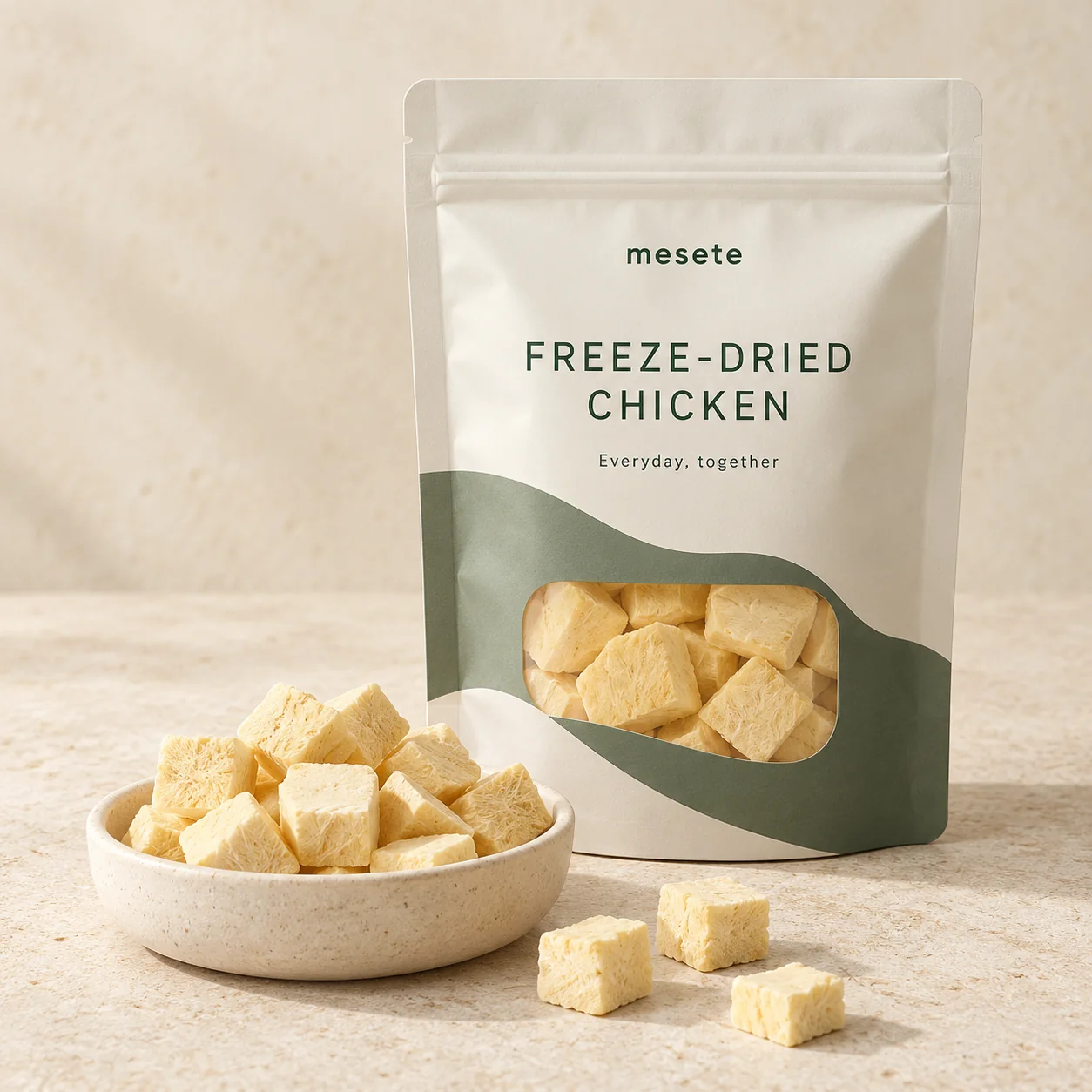
AI-styled photos and mesete pack concepts based on catalogue references. Final recipe, appearance, fill and artwork are confirmed on the approved sample.
mesete / Food & everyday rewards
MS-PF-106
Pale, porous chicken cubes from the freeze-dried catalogue range. A texture-led development reference for buyers who want to define the recipe, intended pet and feeding role before shaping the retail pack.
Share your destination and retail unit. Formulation, pack weight, documents, minimums and timing are reviewed for the selected brief.
01 / Product character
A pale, porous cube brings a recognisable freeze-dried texture to a food assortment. The catalogue identifies freeze-dried chicken but does not establish species suitability, ingredient purity or nutritional adequacy. Use the reference to begin a more specific discussion: what is the product meant to do in the range, for which pet, under which recipe and feeding instructions?
The reference shows light-coloured cubes with dry, porous cut faces. Agree piece dimensions, weight variation, crumble level and appearance on the sample, then review how the packed product arrives after transit.
Confirm the full ingredient declaration, intended species and life stage, analytical values and permitted product description. Do not infer a single ingredient, raw status or a complete-food role from the name or appearance.
Review moisture-control and barrier requirements, closure performance and the shelf-life basis for the actual process and pack. Freeze-drying by name is not evidence of a validated pathogen-control step.

02 / In the everyday
A sample-review moment keeps attention on the porous texture and proposed pouch. It supports a product discussion while the intended pet, nutritional role and use instructions are defined from the actual formulation.
03 / From reference to your specification
Keep the food, process and retail pack connected to the same model and recipe. Request the current information your buying team needs to compare and approve.
Define intended species, life stage and feeding role first, followed by the full recipe, ingredient sourcing, analytical values and any proposed nutritional wording.
Ask for the actual food-safety process, validated controls, microbiological criteria, moisture or water-activity specification and batch traceability.
Compare barrier structure, seal and reseal, net weight, residual fines, handling during transport, lot coding and the supported shelf-life and storage instructions.
04 / A little more clarity
Those descriptions are not established by this catalogue reference. Each needs the final ingredient declaration, process information, species suitability and feeding instructions for the selected product.
Share the model, artwork, pack format and intended channel. Product recipe, packaging structure, print method, minimums and sample approval are reviewed separately; pictured mesete packs are design concepts.
Ask for the selected recipe and ingredient declaration, analytical values, process and batch information, shelf-life basis, feeding and storage instructions, and documents relevant to the destination. Confirm what is available for the actual product and facility.
Send your destination, intended pet and use, pack specification and expected order volume. Minimums, development work, sample charges, price and timing are confirmed against the agreed recipe and pack.
05 / A range with more than one character
 Dried jerky strips
Golden chicken jerky with a visible, fibrous strip format. A considered starting point for dog-treat assortments, with recipe, piece size and retail presentation reviewed together.
Explore the product brief Small cut chicken bites
A small, cut-piece chicken format for a dog-reward assortment. Start with the visible cube reference, then agree piece weight, texture, recipe and packaging for your channel.
Explore the product brief Textured shaped chew
An olive-green, toothbrush-shaped chew reference with rounded nubs and moulded grip details. Explore the format, then review formulation, firmness and sizing for the intended dog range.
Explore the product briefYour next product conversation
MS-PF-106 · Start with the recipe, destination and retail pack