What Should Cat Breeders Include in a Kitten Starter Kit?
 ·
·
13 min read
·
0 reads
On this page
From cattery to home, a useful pack carries familiar routines as well as everyday supplies
The carrier is ready. The family has questions. Somewhere between the excitement of collection and the first evening at home, a small detail becomes important: which food was the kitten eating, where is the familiar blanket, and who should the owner contact next?
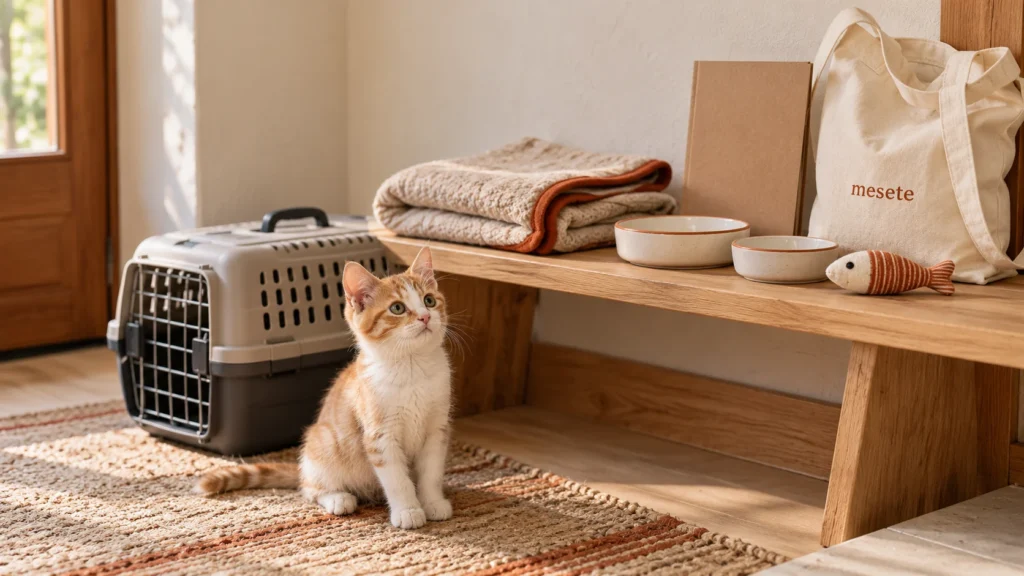
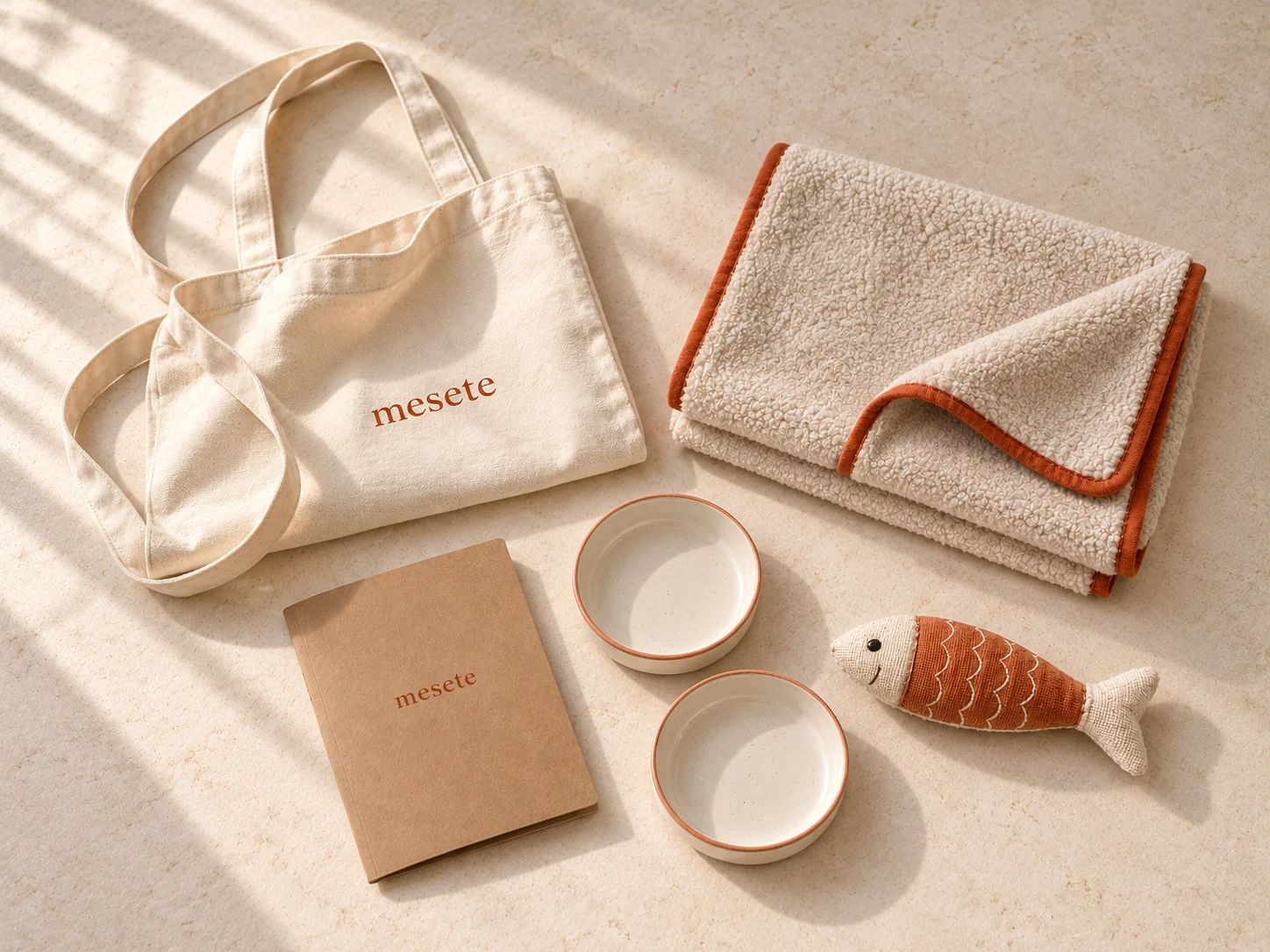
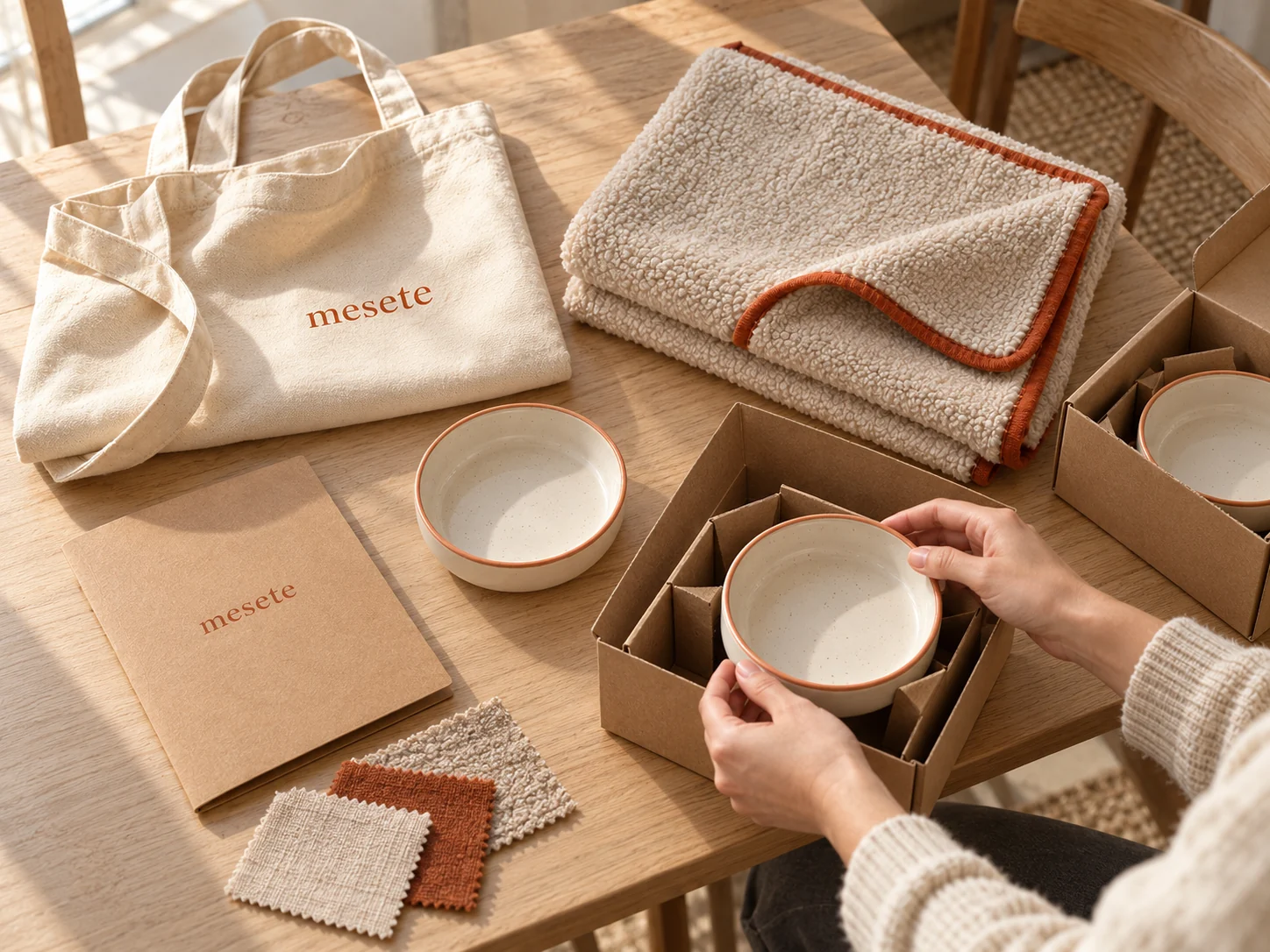
A useful kitten starter kit for breeders brings those answers together. It can include a familiar blanket, an appropriate toy, clearly identified food where supplied, and a short care card. Bowls and other practical accessories can be included when their purpose and suitability are clear. The owner also needs a preparation list covering the carrier, resting space, litter arrangements and everyday supplies that should already be ready at home. 1, 2
For catteries, pet brands and distributors, the commercial task is to make that handover understandable, consistent and possible to repeat. At mesete, that is the starting point for a considered kit brief: useful objects, clear information and details that make sense after the bag is opened.
What is a kitten starter kit actually meant to do?
Think of the kit as the physical part of a conversation. Every included item should answer a practical question: what is this for, how is it used, and what happens when it needs cleaning or replacing?
There are three connected parts to plan:
| Part of the handover | What belongs here | Who needs it |
|---|---|---|
| The take-home pack | Selected everyday items and clearly identified supplies | The new owner |
| The kitten's care information | Current routines, the relevant records and agreed follow-up contacts | The new owner and their vet |
| The purchasing specification | Component list, materials, branding, quantities and packing | The cattery, brand and supplier |
Keep each part readable for its audience. A supplier needs a bowl specification; a new owner needs to know how to use and clean it. A purchasing spreadsheet is not a substitute for the kitten's individual care information.
This channel already has practical examples. Royal Canin's breeder recommendation programme connects packs with feeding guidance, while Dr. Elsey's provides take-home kitten kits through enrolled breeders. These are examples of how information and products can travel together; their published programmes do not establish sales results for a new kit. 5, 6
Which items should go home with the kitten, and what should the owner prepare first?
Start by agreeing who supplies each item. That simple decision prevents a beautiful bag arriving at a home that still lacks something essential.
| Item or information | A useful handover decision | Detail to confirm |
|---|---|---|
| Familiar blanket | Arrange with the breeder where appropriate | Which item is familiar, and its care instructions |
| Current food | Supply an identified product where agreed, or send the exact shopping details ahead | Product name, current feeding plan and pack information |
| Litter information | Share the existing product details before collection | Brand, type and the arrangements the kitten knows |
| Food and water dishes | Include a suitable pair or confirm the owner has them | Separate pieces, accessible shape and cleaning guidance |
| A suitable toy | Choose one the owner can inspect and use appropriately | Intended age, construction and supervision instructions |
| Care card and records | Prepare the individual information before collection | Correct version, next steps and contact details |
| Carrier and home setup | Confirm these before the collection appointment | Secure transport, resting place and accessible resources |
The care principles behind familiar supplies and an organised home are covered by Cats Protection, Blue Cross and PDSA. The choice of which accessories to bundle is a purchasing decision for the individual programme. 1, 2, 3
What should I put on the care card so it is useful on the first evening?
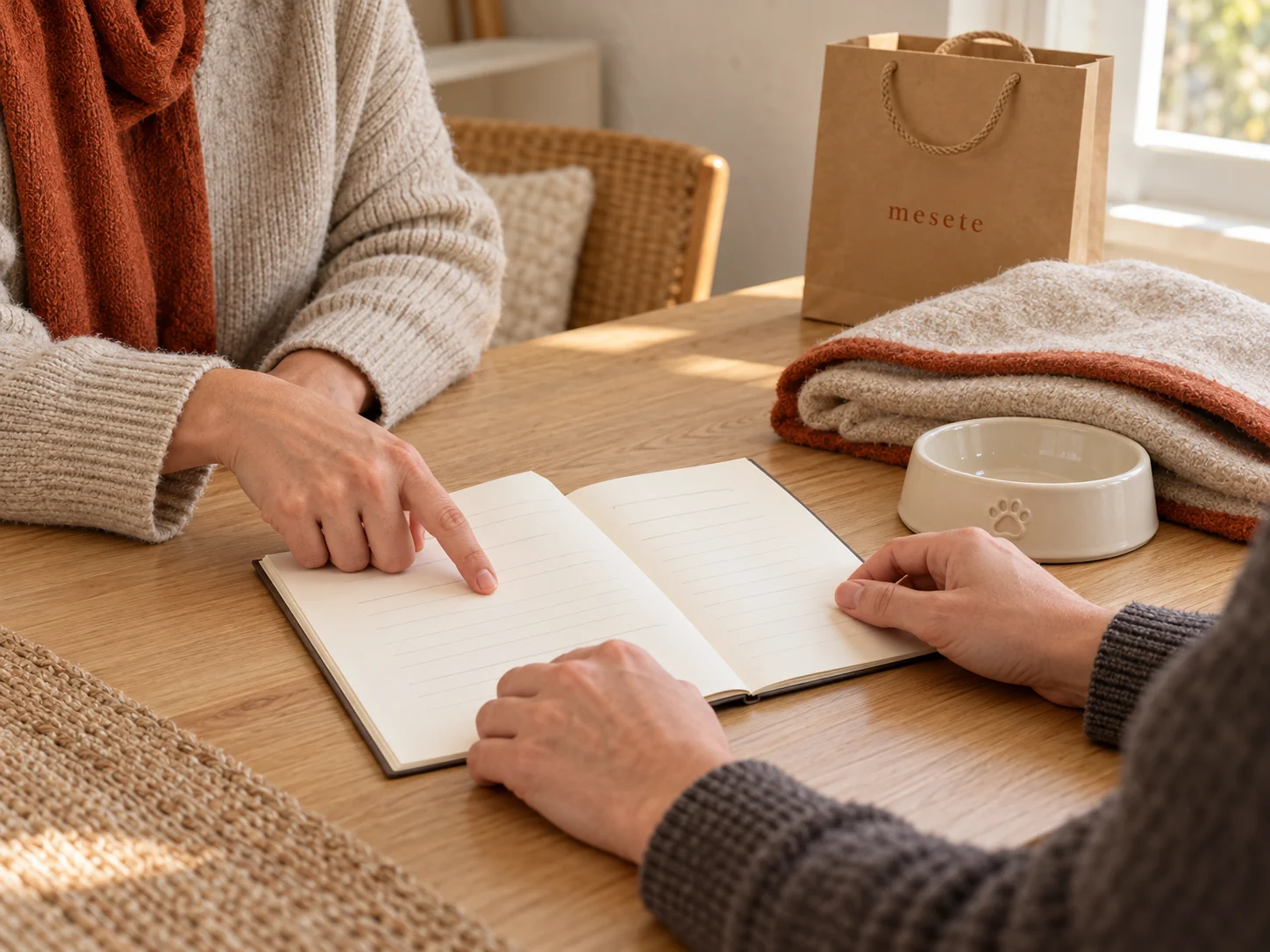
Write for the person standing in their kitchen with the bag open. Give the immediate routine a short, clearly marked place, then keep longer records in their own folder.
An adaptable card can use these fields:
| Field | What to record |
|---|---|
| Current food | Exact product and format, with a photograph or retained label where helpful |
| Current feeding routine | The kitten's existing amounts and timing, supplied by the responsible caregiver with veterinary advice where needed |
| Current litter | Product name and type, plus the tray arrangement already in use |
| Familiar items | Which blanket or toy the kitten has used |
| First home setup | The agreed location for rest, food, water and litter |
| Next care steps | Relevant records and the follow-up arrangements already agreed |
| Contacts | Breeder or rehoming contact, plus the owner's veterinary contact |
| Version | The date the information was checked with the family |
Read the card through with the owner. Ask them to find the food information and the next contact themselves; any hesitation reveals something worth making clearer before they leave.
For a branded programme, keep the printed general guide and the individual kitten information distinct. That makes it easier to reorder the general pack while checking each kitten's details separately.
How can the pack help a kitten settle into the new home?
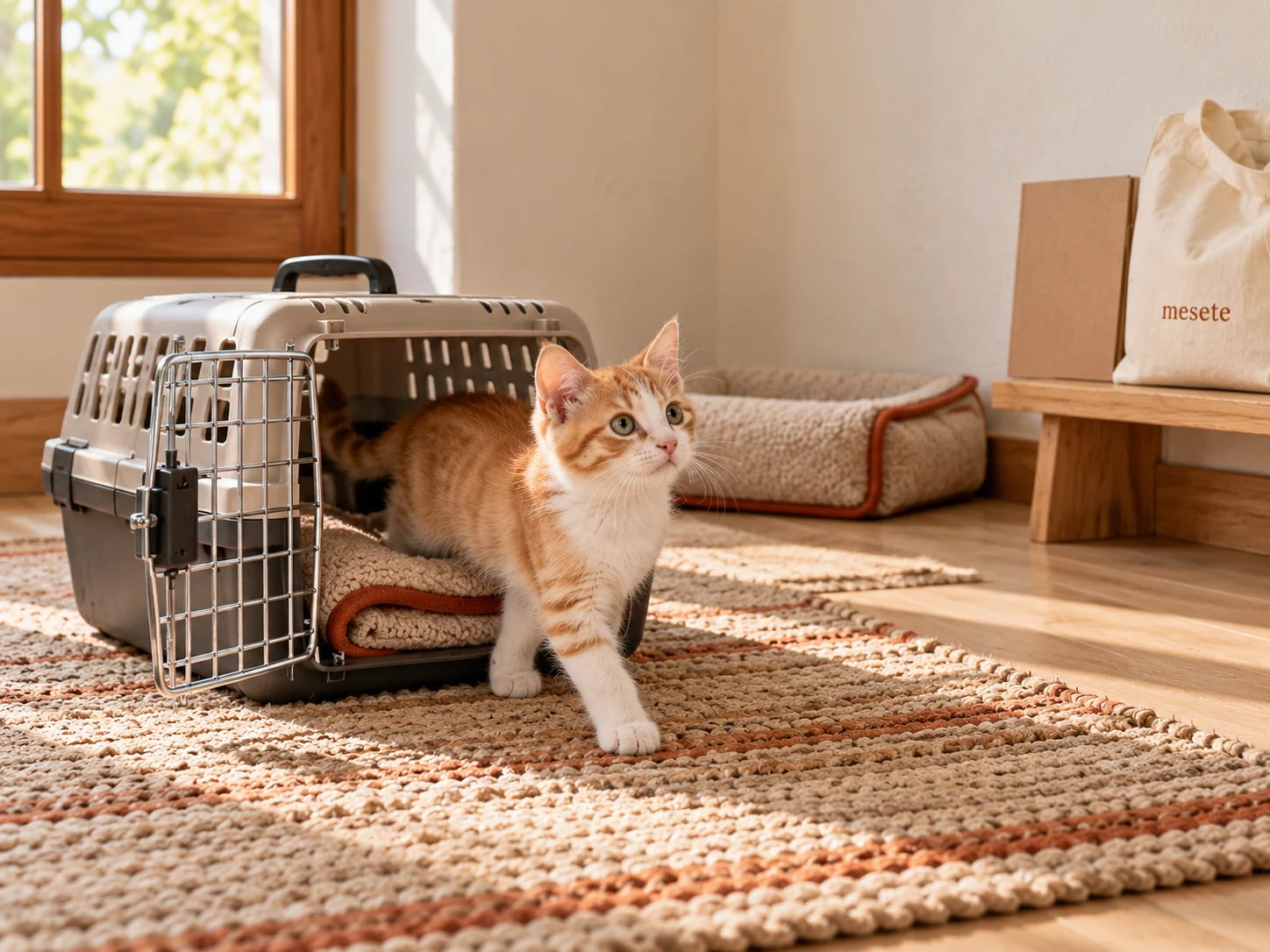
Send the preparation list before collection so the owner can arrange a quiet initial room, accessible hiding and resting places, and the essential resources. Cats Protection recommends allowing a new kitten to explore at its own pace and providing food, water and litter in appropriate separate locations. 1
Match the pack to that preparation. A familiar item should be easy to find. Instructions should be near the top of the bag. The carrier must be arranged before the journey, regardless of whether it is part of the purchased kit.
In practical terms, pack in the order the owner needs to unpack. Keep paperwork protected from damp or food spills, and explain which items are intended for the first evening. A labelled packing checklist for the cattery can sit behind the scenes; the family should receive a simple, usable introduction.
How should food information and feeding accessories be handed over?
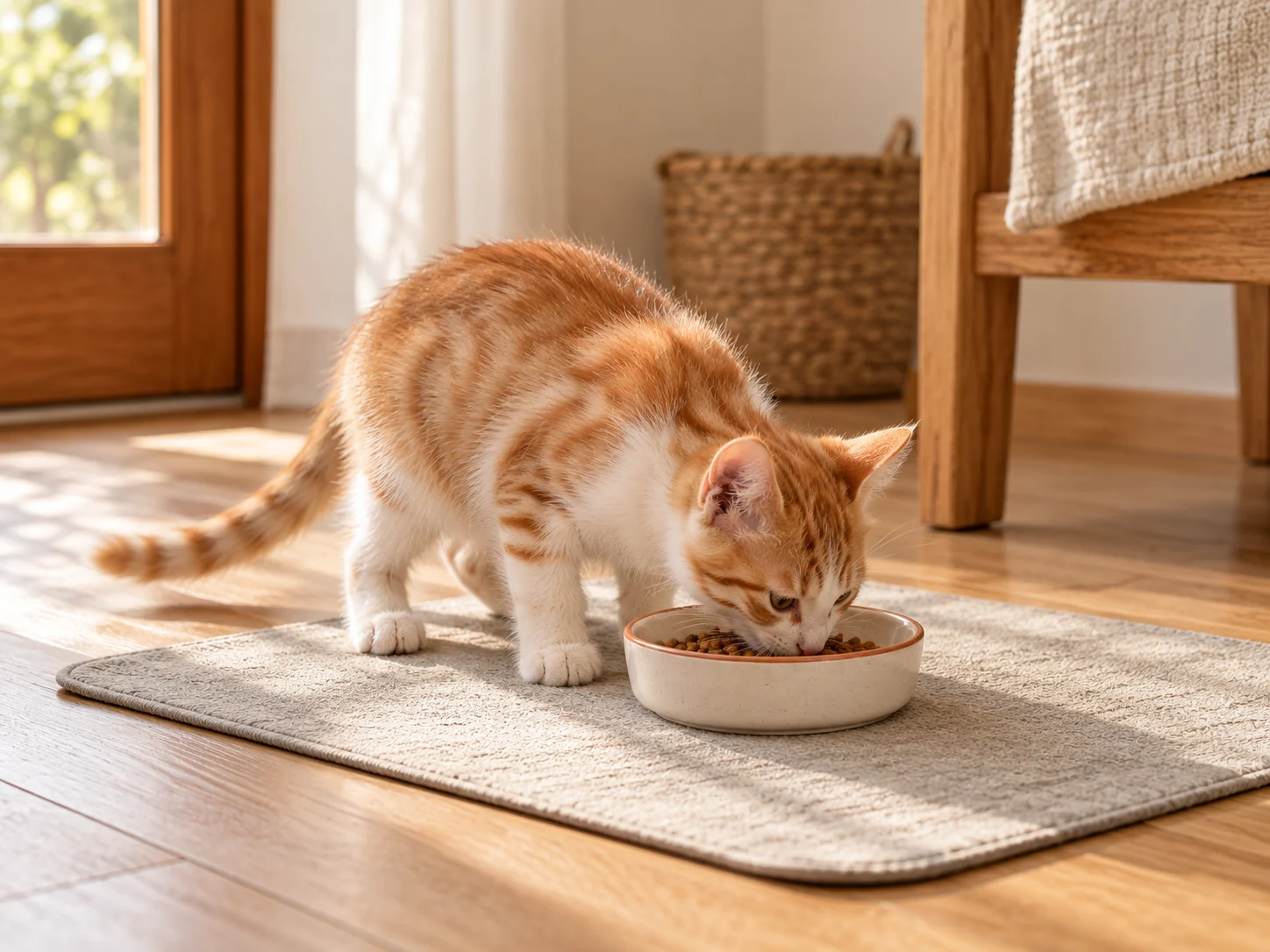
Blue Cross advises owners to ask what a kitten is already eating and to continue that food initially; changes should be gradual. Record the kitten's current routine rather than adding a generic feeding schedule to every pack. 2
If food is included, retain its identity and the information needed to use it appropriately. Loose, unidentified portions make it harder for the owner to understand what they have received. Agree the amount supplied against the kitten's individual plan and the intended period it should cover.
For dishes, ask for the actual internal dimensions, base stability, weight and care instructions. Check the sample on a normal floor or feeding mat, then clean it as directed and inspect it again. Shape, finish and practical handling are more informative than a styled photograph alone.
International Cat Care's kitten guidance recommends water away from food and advises against fixed food-and-water double bowls. Two separate pieces allow that choice of placement. 4
What makes a blanket or bed useful beyond collection day?
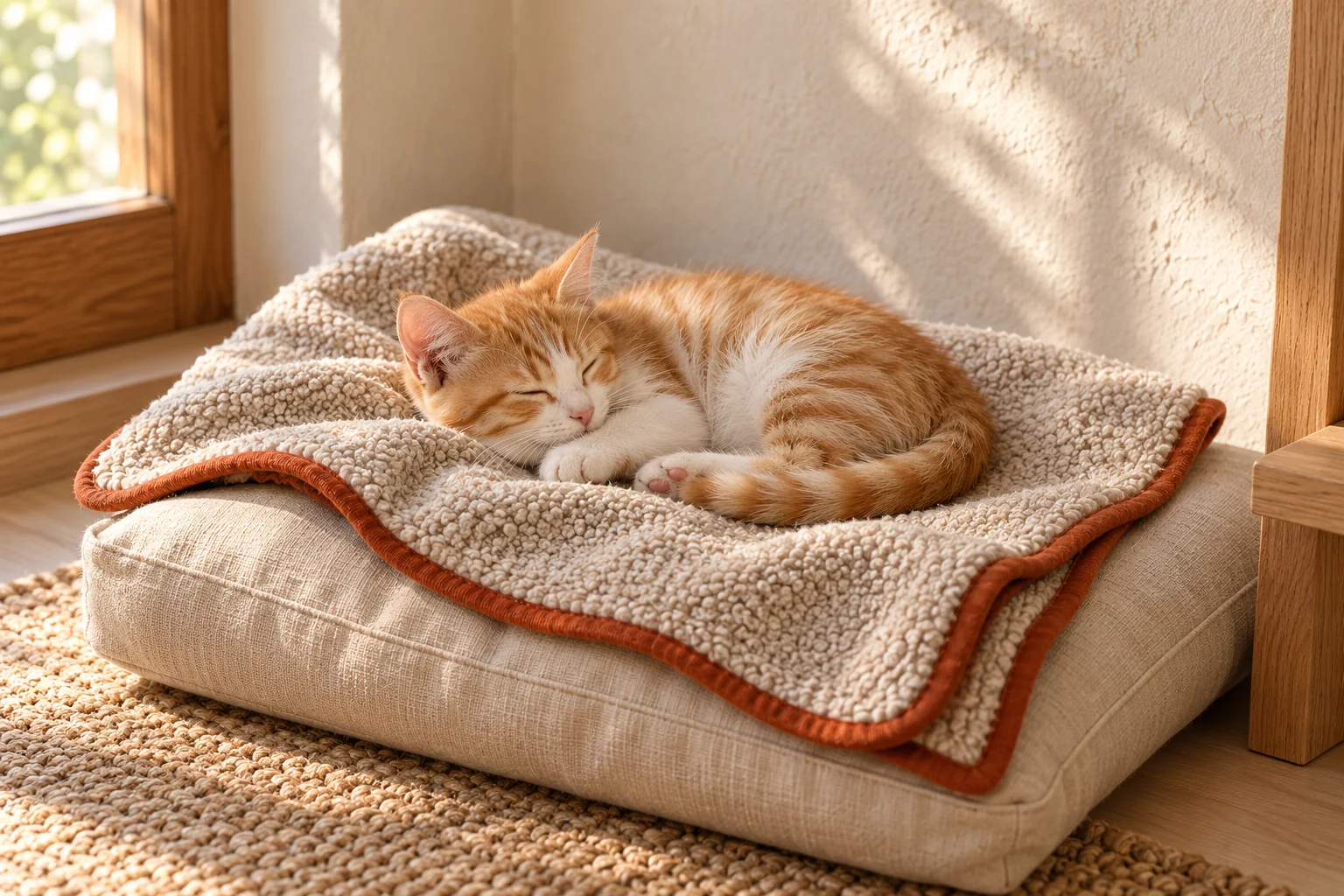
PDSA notes that a blanket or towel carrying a familiar scent can help a kitten feel more secure in its new surroundings. Agree this with the breeder; a newly embroidered blanket and an item the kitten already knows have different roles. 3
For the product brief, define the fabric composition, finished dimensions, binding, seams and care method. After a sample is washed according to its instructions, inspect its shape, texture, loose fibres and logo application. Record the observations, then decide which details belong in the purchase specification.
Think about the owner holding a damp cover at the washing machine. Can they identify how it is cleaned? If a cushion has a removable part, can they put it back correctly? Can a replacement be ordered without buying the entire kit again?
Explore mesete's cat beds and scratchers as a starting point for discussion, then confirm the chosen model, material and intended use against a sample.
How many toys should a kitten starter pack include?
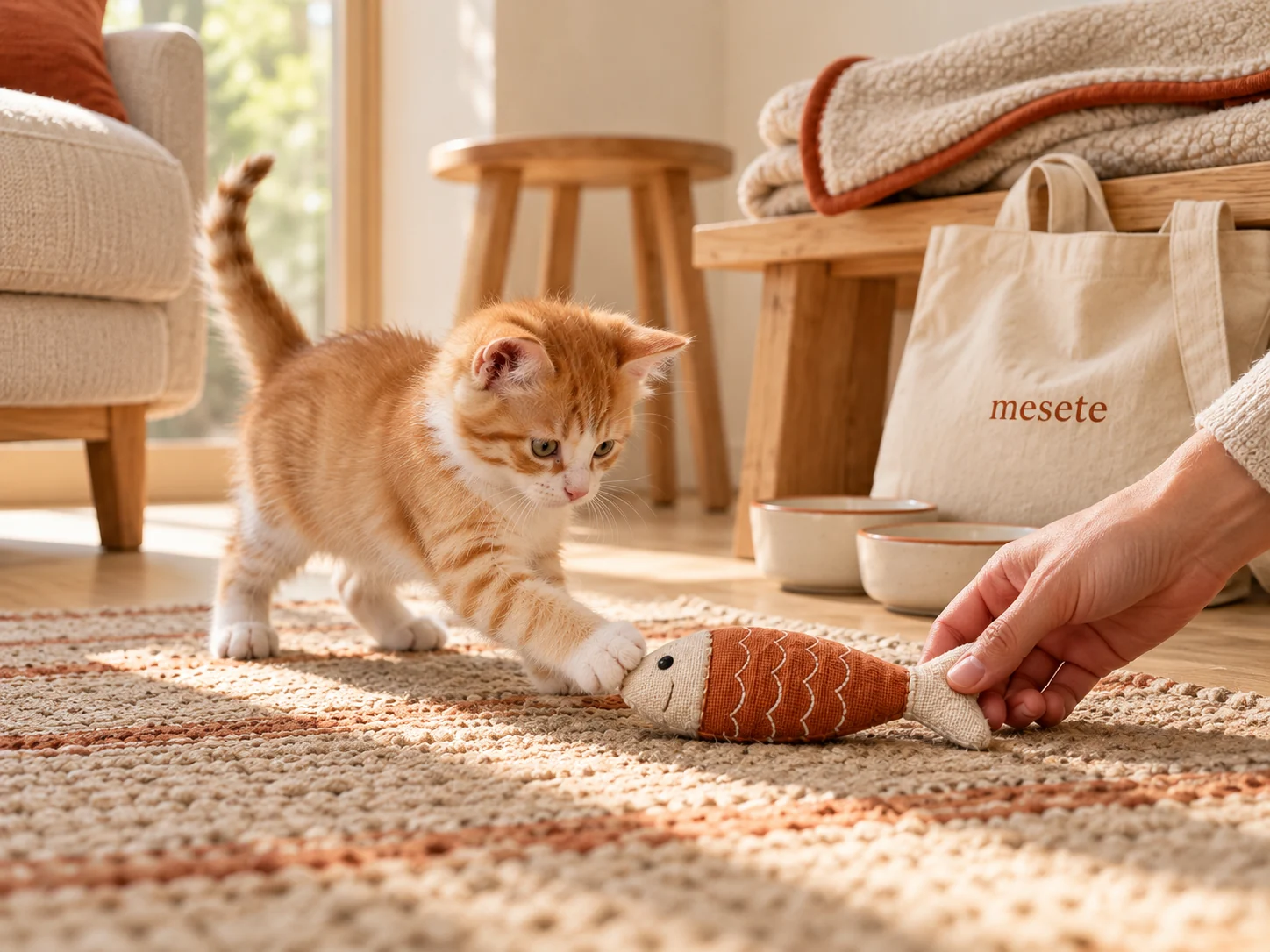
Choose the number after you understand the product. One well-specified toy is easier to evaluate than an assortment whose individual construction is unclear.
For each proposed toy, ask for the intended age and use, dimensions, materials, seams, attachments and instructions. Review the physical sample and the evidence appropriate to the product and destination. A photograph cannot confirm that a small part stays attached or that a material claim is supported.
Give the owner the maker's supervision and inspection guidance. RSPCA's kitten-care advice includes opportunities for play and scratching as part of preparing the home; a small take-home toy can complement those arrangements. 7
Should I include a smart fountain, feeder or automatic litter box?
Assess smart products as a separate decision for the home and the individual kitten. Confirm the manufacturer's age or weight limits, operating requirements, cleaning procedure and support arrangements for the exact model.
A large capacity or a long feature list does not answer those questions. Ask the owner to review the device instructions, installation and maintenance before relying on it. Keep suitable everyday resources available while any new product is introduced, with veterinary input if the kitten's needs require it.
For a starter-kit programme, a clearly defined optional upgrade can be easier to manage than including an unfamiliar device in every handover. It also gives the supplier a specific model and use case to assess.
Is a ready-made kit or a customised kit better for a cattery?
The better choice depends on the job the programme needs to do. Compare the complete contents, the information supplied and the work involved in preparing each handover.
| Approach | When it may fit | What to examine |
|---|---|---|
| A focused handover pack | A cattery already has an established owner shopping list | Clear information, selected familiar items and the preparation process |
| A coordinated accessories pack | A brand wants repeatable everyday items and presentation | Component suitability, consistent supply and replacement options |
| A customised programme | A brand or distributor serves several catteries or markets | Versions, languages, artwork, packing and component minimums |
These are planning approaches, not fixed mesete packages or price tiers. Start with a contents list and ask which parts can be supplied, customised and replenished.
Keep the first version manageable. A stable core with one clearly identified optional item is easier to quote, inspect and reorder than several bundles whose contents change without a record. Any substitution should be agreed against the specification before it reaches a family.
How can I compare the real cost without being distracted by piece count?
Ask every supplier to quote the same complete kit. Identify the unit used for each line: individual item, pair, retail pack, finished kit or outer carton.
For a simple planning example, 100 kits containing two dishes each require 200 dishes. A quote for 100 dishes would only cover 50 of those kits. The same check applies to liners, printed cards and protective packaging.
Compare the goods, branding setup, packaging, assembly and quoted delivery terms together. Record any additional charges and the assumptions behind the delivered cost. Freight comparisons also need the packed dimensions, weight and kits per carton, since bulky presentation can change the economics of the order.
Then ask how replacements work. A low opening price may be less useful if a damaged component can only be replaced through a large mixed reorder. Define how shortages, damage and agreed substitutions will be handled in the quotation and order documents.
What should I ask a private-label supplier before approving the kit?
Send a brief that can be answered line by line:
- Destination and channel: the market, buyer type and whether the pack is handed over, sold in-store or shipped to a home
- Quantity: planned kits, items per kit and the breakdown by version or colour
- Components: model references, dimensions, materials and intended use
- Branding: artwork, colour references, logo method and position
- Packaging: the desired bag or box, protective packing and printed information
- Minimums: product, colour, printing, packaging and assembly quantities separately
- Sample review: the questions the sample needs to answer and the reference retained after approval
- Delivery and reorders: required arrival date, quoted delivery basis, packing details and replacement arrangements
This is where a private-label kitten kit becomes a practical sourcing project. mesete's sampling and ordering guide and quality and supply information provide a starting point for that discussion. Confirm the selected components and order terms in writing.
Questions buyers often ask about kitten starter kits
Does a kitten starter kit have to include a carrier?
The collection journey needs suitable transport, but the carrier can be provided separately by the owner. Agree that responsibility before collection and make it visible on the preparation list. 1
Should I add new treats or change the food to match the pack branding?
Keep the kitten's existing diet information central to the handover. Treats and other additions need their own suitability review, and feeding changes should follow appropriate advice. Packaging colours should not determine a kitten's diet. 2
Can the same accessory kit be used for every kitten?
A consistent accessories specification can simplify purchasing. The caregiver still needs to check suitability and complete the individual information for each kitten. Keep those checks in the handover process, even when the general booklet and bag are identical.
Can mesete help develop a branded kitten starter kit?
Share your market, component list, planned quantity, packaging direction and required arrival date. The team can review the brief and confirm which items and customisation options can be supplied. Prices, minimums, documents and timing depend on the agreed configuration.
A familiar start, thoughtfully packed
A well-considered handover leaves the owner with useful things and a clear next step. For a brand, that means paying attention to the care card, the product specification and the first unpacking experience as carefully as the colour of the bag.
Bring mesete a short brief and a real use case. We can start the conversation with the products, presentation and sample questions that matter for your programme.
Discuss your kit brief · Explore private label
Image note: Images are AI-generated editorial illustrations of proposed kit configurations and everyday scenarios. They are not photographs of existing mesete stock, customers or completed tests. Final products and availability are confirmed through the selected specification and sample.
Care note: The guide concerns handover planning and product selection. Follow the responsible caregiver's and veterinarian's advice for the individual kitten, alongside applicable local requirements.
Sources and further reading
- Cats Protection — Bringing a new kitten home
- Blue Cross — Kitten food
- PDSA — Kitten checklist
- International Cat Care — Caring for your new kitten
- Royal Canin Professionals — Puppy and kitten recommendation programme
- Dr. Elsey's — Breeder kitten-kit programme
- RSPCA — How to care for your kitten
Sources checked on 2 November 2026. Reference to an organisation or programme does not imply an affiliation with mesete.
Document request
Smart Pet Feeder — Supplier Evaluation Checklist
A 1-page checklist to vet smart feeder suppliers: FCC/CE, app stability, MOQ, tooling ownership and lead time.
Our team will confirm availability. This does not subscribe you to marketing emails.
Ready to source smart pet products?
Tell us your target market and volume — we'll match the right factory, handle compliance, and quote within 24 hours.