How to Choose a Smart Litter Box Manufacturer: The Complete B2B Buyer’s Guide
 ·
·
12 min read
·
55 reads
·
·
12 min read
·
55 reads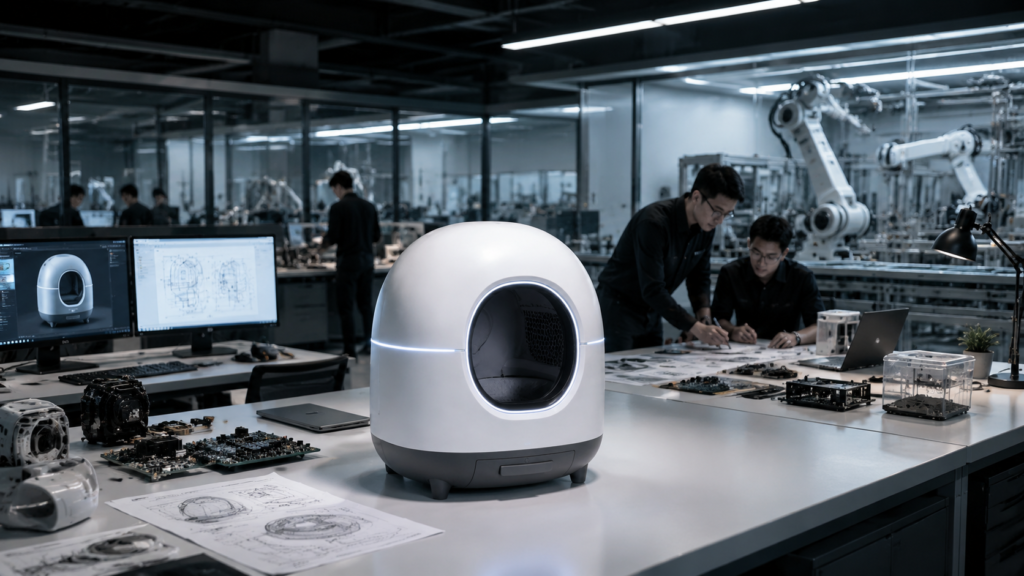
On this page
The best smart litter box manufacturer is usually the least flashy one in the room. Stable firmware. Repeatable molding. Real compliance files. A safety system that still behaves after thousands of cleaning cycles. That is what keeps a B2B launch alive.
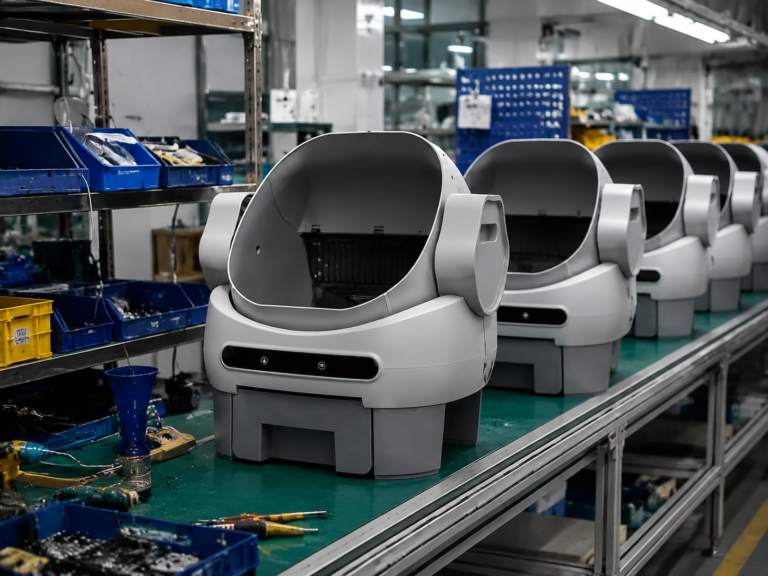
Get the OEM choice wrong and the damage piles up fast: sample revisions that never end, CE paperwork that does not match the shipped SKU, app bugs, packaging failures, delayed retail onboarding. Mesete belongs in this conversation as a smart pet products manufacturer serving the automatic cat litter box category and related connected pet care hardware, and the first things any buyer should verify on a live project are current ISO 9001 quality management documents plus model-specific CE, RoHS, and wireless compliance files where Wi-Fi or Bluetooth applies. This guide is the filter. Not marketing fluff. Just how to judge whether a supplier can really carry your program from prototype to pallet.
What Makes a Smart Litter Box “OEM-Ready”?
A smart litter box becomes OEM-ready when the hard parts are already solved in engineering, not just dressed up in industrial design. Buyers sometimes get hypnotized by the app screenshots and the glossy shell. Bad habit. The real question is whether the unit can separate waste consistently, protect the cat during motion, contain odors, survive shipping, and keep its sensor logic from drifting after months of daily use.
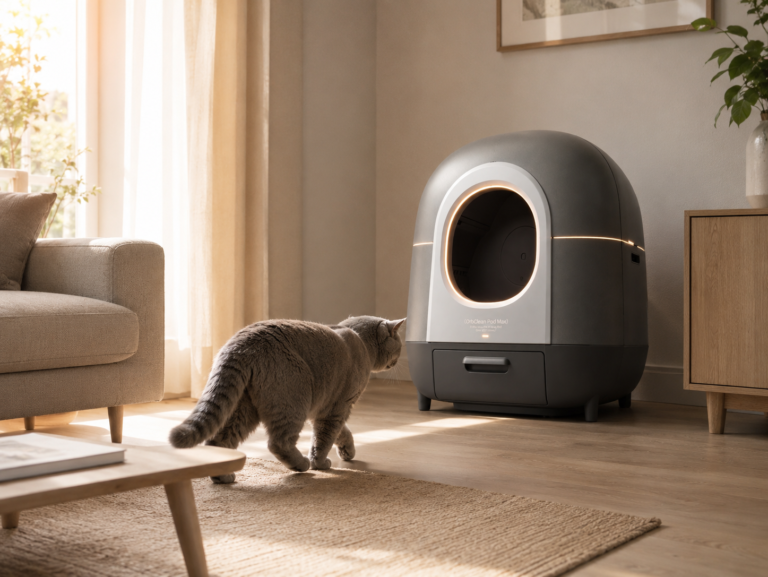
When people in this category say smart litter box, they usually mean an automatic cat litter box with motorized cleaning, sensing hardware, and connected app functions — not a simple self-raking tray with no real electronics behind it.
An OEM-ready unit should already have a few things nailed down:
- A safety stack that includes anti-pinch logic, occupancy detection, interruption on approach, and recovery behavior after a jam or power loss
- Waste separation that works with common clumping litter instead of only one fussy proprietary blend
- Sensor reliability, usually load cells, infrared, radar, or a mixed sensor architecture for cat presence and usage tracking
- App support that handles remote status, cleaning schedule control, alerts, and basic health monitoring without constant pairing drama
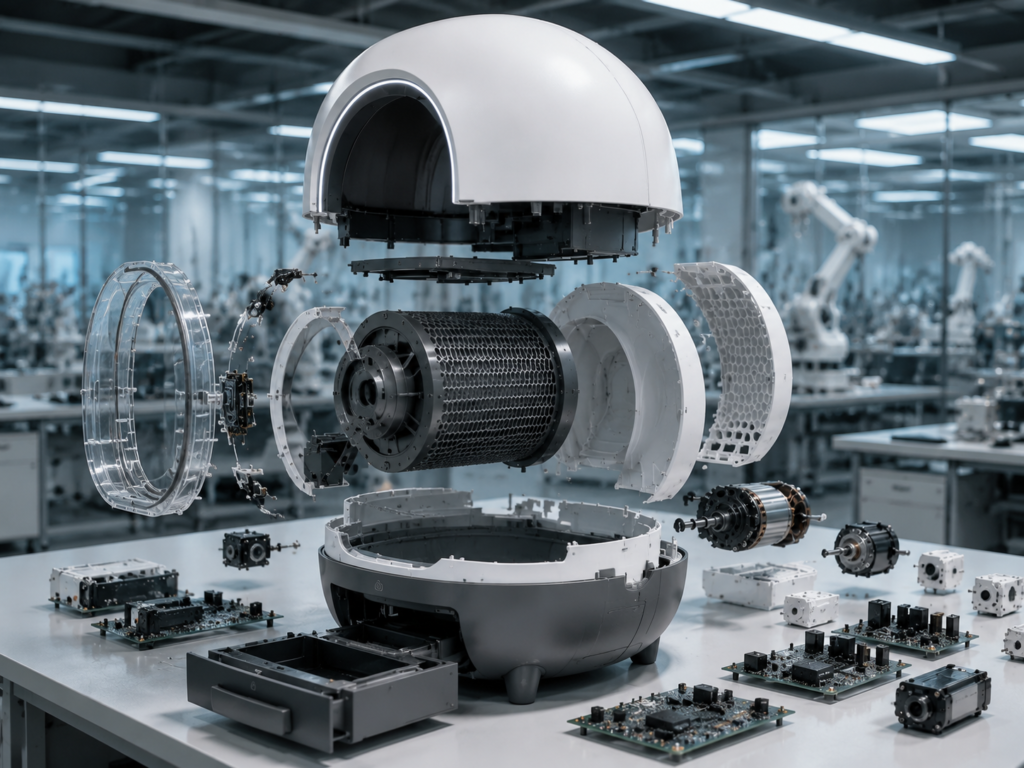
Independent product reviews and lab testing of consumer self-cleaning litter boxes consistently reward the same things: quiet cycling, real odor control, roomy waste drawers, and dependable usage tracking — and they consistently flag the same risks: high upfront cost, liner maintenance headaches on some drum designs, and safety concerns around rotating or enclosed cleaning mechanisms. That matters directly for OEM sourcing, because these are not “nice to know” consumer preferences. On a private-label program, they become your warranty cost, your recall exposure, and your brand’s reputation — which is exactly why the engineering behind the shell matters more than the shell itself.
The category is growing quickly, too, with market coverage pointing to rising demand for connected pet care devices. Growth like that attracts rushed factories, half-baked private label offers, and a lot of very confident sales reps — all the more reason to filter on process, not promises.
Core Criteria for Evaluating a Manufacturer
A decent factory can make a plastic shell. A real smart litter box manufacturer has to manage mechanics, electronics, firmware, connectivity, and animal safety in one system. That blend is where weak suppliers get exposed.
Certifications & Compliance
Start with document discipline. Always.
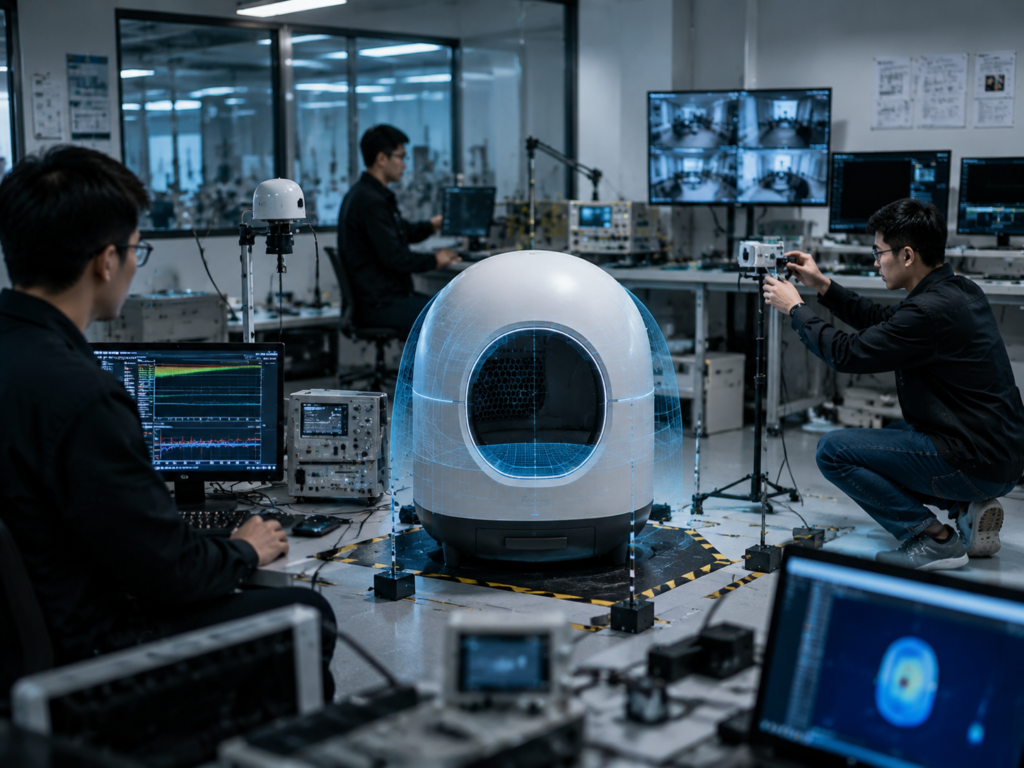
For a connected cat litter box, ask whether the compliance file is tied to the exact model, exact PCB, exact radio module, exact power adapter. If the supplier waves around one old test report for a “similar” model, assume you are being invited into a future headache.
A serious manufacturer should understand CE documentation, RoHS material restrictions, EMC behavior, radio testing when wireless functions exist, and battery transport rules if the unit has an internal lithium cell or backup pack. If the box syncs to an app, you also need a straight answer on data handling, server location, and whether the current app flow can support GDPR obligations for EU users. Some factories get strangely quiet at that point. Notice that. (See our full breakdown: EU Pet Product Import Regulations 2026: CE, RoHS, REACH Explained.)
MOQ Flexibility
MOQ tells you how the factory thinks.
For a stock-shell, lightly customized smart litter box, buyers often see MOQs in the low hundreds — sometimes 100 to 300 units for a private label run, if the hardware is unchanged and the factory already has packaging, firmware, and carton specs settled. The moment you want a new mold, new control board layout, custom app features, or a different waste drawer geometry, the math changes. Then you are dealing with tooling, validation, and component commitments, and the MOQ can move to 500, 1,000, or more depending on the build.
Cheap MOQ is not automatically good news. Sometimes it just means the supplier is desperate, or plans to substitute parts later.
R&D Capability
This category lives or dies in R&D.
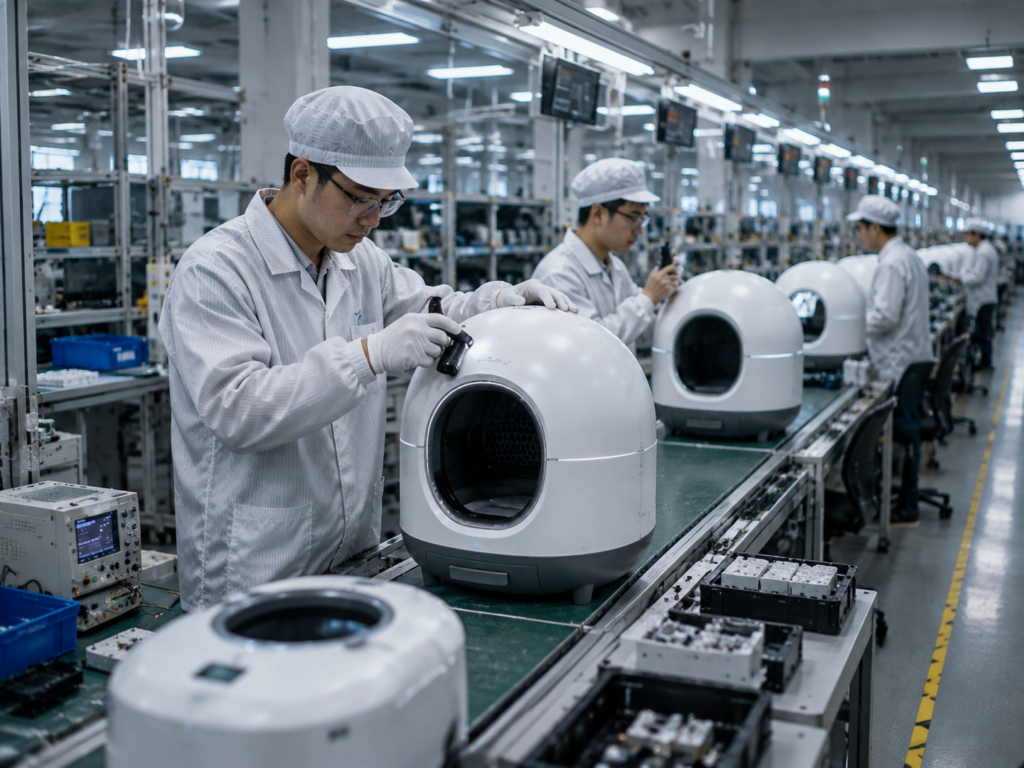
You want a team that can speak plainly about motor torque curves, load-cell calibration, sensor redundancy, Wi-Fi or Bluetooth pairing stability, firmware OTA updates, and how the cleaning algorithm handles mixed cat litter, heavy waste clumps, or a cat that re-enters mid-cycle. If the engineering conversation never gets beyond “our app is very convenient,” walk.
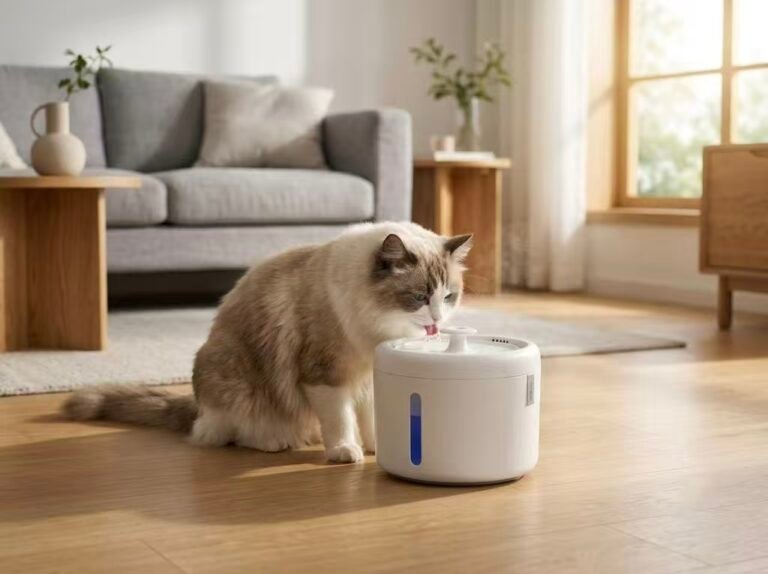
Good R&D also matters for line extension. A manufacturer that already works across smart feeders, automatic water fountains, litter systems, and other smart pet products often has better instincts on app architecture, user behavior, and power-management tradeoffs — shared hardware and software know-how can save months.
Quality Control Process
Everyone claims quality control. Very few describe it well.
You are looking for actual process, not adjectives: incoming inspection on motors, sensors, liners, and PCB assemblies; in-process checks on fit, pinch points, and drum or sifting movement; final inspection on app pairing, weight accuracy, cleaning cycle completion, and carton condition; then aging tests, drop tests, and a plan for traceability if field failures show up.
If the supplier cannot explain its IQC, IPQC, and OQC flow in plain terms, the odds are high the flow is thinner than the brochure suggests.
Certifications & Compliance to Require for the EU Market
EU buyers need to be especially stubborn here because “CE certified” is often used loosely, and sometimes incorrectly. In most cases, what you want is not a random logo on a carton. You want the right conformity path, backed by the right documents.
| Requirement | When it matters | What to request |
|---|---|---|
| CE Declaration of Conformity | For the finished product sold in the EU | Model-specific DoC listing applicable directives and standards |
| RoHS | For electrical and electronic equipment | RoHS compliance statement plus supporting material or test evidence |
| RED | If the unit uses Wi-Fi or Bluetooth | RED test reports tied to the actual radio configuration |
| EMC | For electronic interference and immunity | EMC reports for the exact product version |
| Power adapter conformity | If external AC adapter is included | Matching EU plug spec and adapter compliance documents |
| REACH awareness | For material substance obligations | Supplier statement on SVHC management and material controls |
| UN38.3 and shipping papers | If lithium batteries are included | Battery transport test summary and shipping documentation |
One wrinkle people miss: WEEE and importer responsibilities do not disappear just because the factory says “EU ready.” The economic operator placing the goods on the EU market still has obligations — and so does the brand owner, depending on the route to market. (Related: Sustainable Pet Product Manufacturing: EN 13432, Plant-Based Materials & the Future.)
OEM vs ODM: Which Model Fits Your Brand?
This decision shapes your cost, speed, and bargaining power more than almost anything else.
| Model | Best for | Usual tradeoff |
|---|---|---|
| OEM | Brands with their own specs, design language, or firmware requirements | Higher development cost, longer lead time, more engineering coordination |
| ODM | Buyers who want ready solutions and faster launch | Less differentiation, shared platform limits, thinner IP control |
If you already know the cleaning mechanism, app logic, and industrial design you want, OEM makes sense. If you need a private label pet product line on a tighter schedule, ODM manufacturing can be the smarter move. Frankly, a lot of first-time buyers should start with ODM, learn the failure points, then graduate to deeper customization.
White-label app support sits in the middle. Some factories offer a branded front end on top of shared backend infrastructure — useful, yes, but also risky if you do not control roadmap priorities. (For the full comparison, see OEM vs ODM Pet Products: Which Model Fits Your Brand?.)
How to Vet the Factory Before You Commit
Do not vet with a catalog. Vet with friction.
- Ask for a live factory walk-through, not just beauty shots of a workshop.
- Tear down the sample and inspect motor housing, sensor placement, liner fit, and connector quality.
- Match every compliance document to the exact sample SKU and radio configuration.
- Run a pilot order with written AQL terms, spare-parts commitments, and post-sale response times.
And push the unglamorous questions. Who owns the mold? How are firmware bugs escalated? What happens if the app vendor changes its API? Can you buy replacement liners, filters, or litter bags two years later? That last one sounds boring until your distributors start yelling. (Full checklist: How to Vet a Pet Product Factory: Audit Checklist for Importers & Distributors.)
Red Flags to Avoid When Choosing a Partner
A few signals should make you slow down hard:
- The factory promises “universal litter compatibility” but cannot show performance across at least several common clumping litter types
- Sales says the app is fully customizable, engineering says almost nothing, and nobody can explain backend ownership
- Compliance files are generic, expired, or obviously tied to another model name
- The sample works fine once, then struggles with repeated cycles, lingering odors, or inconsistent cat recognition
There is another red flag, softer but still real: the supplier only talks about the unit, never the program — no conversation about packaging tests, shipping carton dimensions, spare boards, firmware maintenance, claims handling, or replacement parts. That usually means they sell samples, not supply chains.
Where Mesete Fits This Criteria

Mesete makes the most sense if you are looking for a partner in smart pet hardware rather than a generic plastics factory trying to moonlight in pet products. That distinction matters. Automatic litter boxes sit right at the crossroads of industrial design, motor systems, connected electronics, safety logic, and retail durability. A supplier that already thinks in those system-level terms is usually far more useful than a cheaper shop that only handles assembly.
The fit gets stronger if your roadmap is broader than one SKU. Brands building a private label pet product line often want a cat litter box first, then smart feeders, automatic water fountains, maybe other smart pet products once channel traction shows up. Shared app logic, packaging standards, and sourcing relationships can lower cost over time — not always, but often enough to matter.
What you should want from any manufacturer, Mesete included, before any meaningful deposit, is document-level proof — not slogans. The BOM-controlled sample record. Incoming inspection logs for motors and sensor batches. Calibration records for weight sensing. Final inspection checkpoints for cleaning cycle completion, app pairing, and noise abnormality. Carton drop-test data. Return-rate tracking from prior production. Real factories have this. Messy, detailed, maybe not pretty, but real.
And the paperwork should read like paperwork. A conformity packet should tie to a specific model number and revision, with report identifiers that follow a clear, traceable format — test type, date, sequence number — not a single decorative graphic that just says “CE.” Same with quality management: if ISO 9001 is part of the pitch, ask for the current certificate, issuing body, scope, and expiration. The point is not to play gotcha. The point is to see whether the factory runs on controlled process or hopeful storytelling. Learn more about Mesete’s OEM process and quality control system.
FAQ
What’s the typical MOQ for a smart litter box OEM order?
For an existing model with private label packaging, 100 to 300 units is common enough to be believable. For real OEM work with tooling changes, firmware changes, or revised electronics, expect 500 units and up, sometimes well into the low thousands.
How long does custom smart litter box development take?
If you are customizing a ready solution, samples can happen in a few weeks. Full custom development is another animal — eight to sixteen weeks is a realistic starting band for hardware, validation, and packaging, and longer if new molds or certification work are involved.
Do manufacturers provide white-label app support?
Many do, but “white-label” can mean almost anything. Ask who owns the codebase, who pays for cloud services, what happens with OTA firmware updates, and whether the data flow is suitable for EU privacy requirements.
What certifications should an EU-bound supplier have?
At minimum, look for the correct CE conformity pathway, RoHS compliance, and RED or EMC support where wireless electronics are involved, plus battery transport documentation if applicable.
Can I get a sample before a bulk order?
You should insist on it. Ask for two samples if possible — one sales sample and one pulled from normal production conditions — and confirm carton size, replacement parts, and after-sales support before scaling to bulk.
Request a Free Sample · Get a Custom Quote
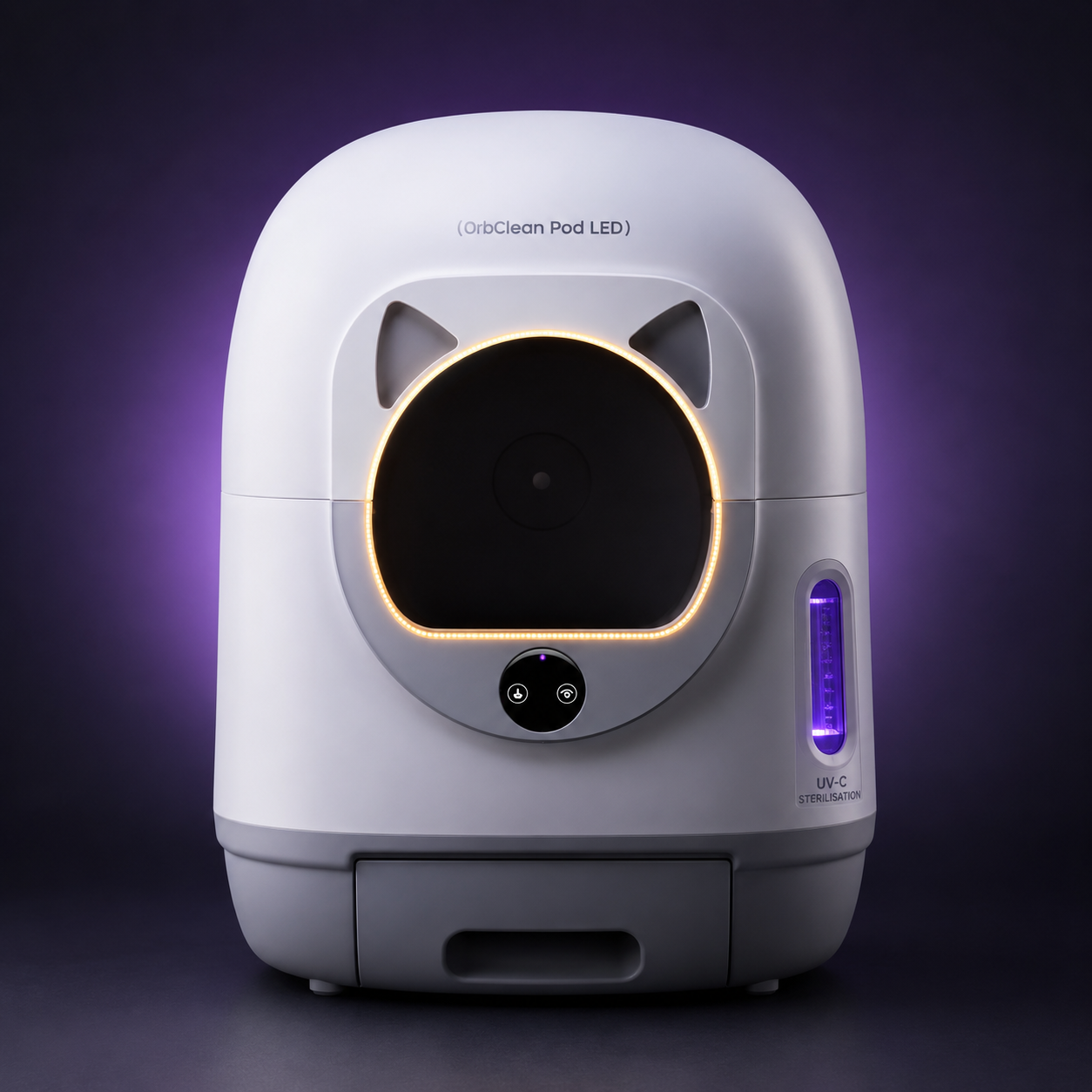
- 360° Rotating Drum
- 12 Smart Sensors
- Carbon-Sealed Waste Compartment
If you are comparing smart litter box manufacturers, ask for the sample, the compliance packet, the QC flow, and the MOQ logic in one conversation. That alone clears out a surprising amount of noise. For a custom quote, be ready with your target market, certification needs, app requirements, estimated volume, and whether you want OEM or ODM. The cleaner your brief, the faster you find out who is real.
Free download
Smart Pet Feeder — Supplier Evaluation Checklist
A 1-page checklist to vet smart feeder suppliers: FCC/CE, app stability, MOQ, tooling ownership and lead time.
No spam. Unsubscribe anytime.
Ready to source smart pet products?
Tell us your target market and volume — we'll match the right factory, handle compliance, and quote within 24 hours.