
A visible chunk format
The catalogue shows pale chicken pieces and shreds in liquid. Review particle size, colour, consistency and the agreed solids-to-liquid balance on an opened sample from the proposed production format.

AI-styled photos and mesete pack concepts based on catalogue references. Final recipe, appearance, fill and artwork are confirmed on the approved sample.
mesete / Food & everyday rewards
MS-PF-105
A wet cat-food reference with visible chicken pieces in a light liquid. Review the recipe, solids-to-liquid balance and intended nutritional role alongside the proposed can or other suitable pack.
Share your destination and retail unit. Formulation, pack weight, documents, minimums and timing are reviewed for the selected brief.
01 / Product character
Visible chicken fibres and a light liquid give this reference a distinct appearance from mousse or dense gravy. That is a useful way to begin a wet-food range discussion, but appearance alone cannot define the ingredient list or nutritional role. Bring the recipe, processing and container into one specification so the sample, artwork and quotation describe the same product.
The catalogue shows pale chicken pieces and shreds in liquid. Review particle size, colour, consistency and the agreed solids-to-liquid balance on an opened sample from the proposed production format.
A wet texture does not establish complete and balanced nutrition. Confirm the formulation, analytical information, species and life stage, and whether the final product is positioned as complete, complementary or another permitted category in its market.
The pictured mesete tin is a packaging concept. Discuss the suitable container, fill weight, closure integrity, process validation and label space before agreeing a retail format or case price.
02 / In the everyday
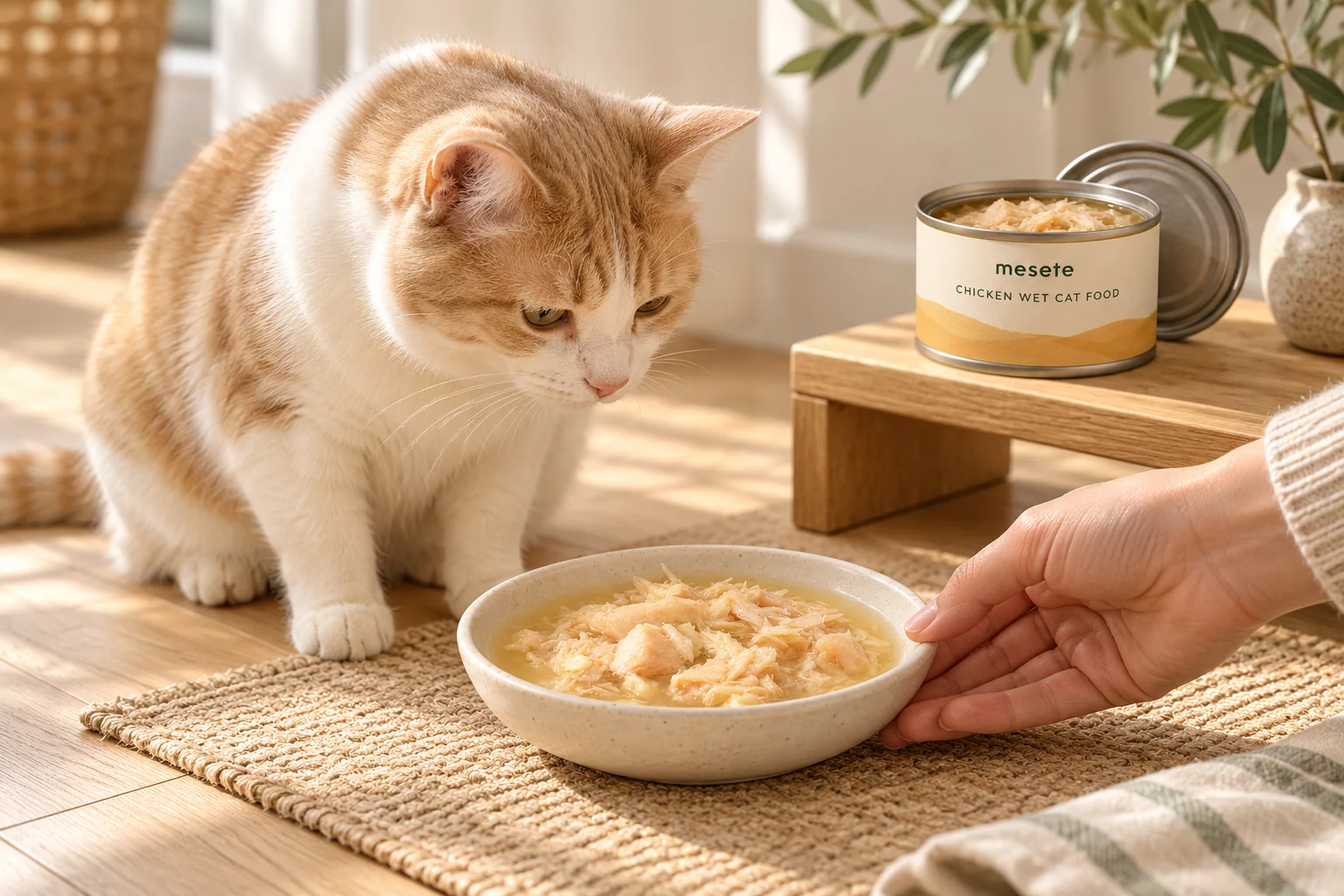
A quiet preparation scene puts the chicken-piece reference beside a cat at home. The pictured amount is styling, not a feeding recommendation; the approved recipe sets the role and portion guidance.
03 / From reference to your specification
Keep the food, process and retail pack connected to the same model and recipe. Request the current information your buying team needs to compare and approve.
Review the complete ingredient declaration, analytical values, intended species and life stage, nutritional adequacy basis and market-specific feeding description.
Request the relevant processing validation, container-closure checks, microbiological criteria, batch identification and shelf-life documentation.
Agree container type, declared net weight, fill and drained-weight requirements if applicable, opening method, storage instructions after opening and case packing.
04 / A little more clarity
That classification has not been established by the catalogue. It must be confirmed from the final recipe, supporting nutritional information and destination-market labelling review before artwork is approved.
Share the model, artwork, pack format and intended channel. Product recipe, packaging structure, print method, minimums and sample approval are reviewed separately; pictured mesete packs are design concepts.
Ask for the selected recipe and ingredient declaration, analytical values, process and batch information, shelf-life basis, feeding and storage instructions, and documents relevant to the destination. Confirm what is available for the actual product and facility.
Send your destination, intended pet and use, pack specification and expected order volume. Minimums, development work, sample charges, price and timing are confirmed against the agreed recipe and pack.
05 / A range with more than one character
 Lickable squeeze sachet
A lickable cat-treat format in a slim squeeze sachet. Build a clear private-label brief around recipe, consistency, opening and retail pack, with mesete styling that keeps the shared moment in view.
Explore the product brief Dried jerky strips
Golden chicken jerky with a visible, fibrous strip format. A considered starting point for dog-treat assortments, with recipe, piece size and retail presentation reviewed together.
Explore the product brief Small cut chicken bites
A small, cut-piece chicken format for a dog-reward assortment. Start with the visible cube reference, then agree piece weight, texture, recipe and packaging for your channel.
Explore the product briefYour next product conversation
MS-PF-105 · Start with the recipe, destination and retail pack