Can a Litter Box Predict a Vet Visit Before It Happens? The Rise of AI-Powered Cat Health Monitoring
 ·
·
Updated Jul 13, 2026
·
11 min read
·
61 reads
·
·
Updated Jul 13, 2026
·
11 min read
·
61 reads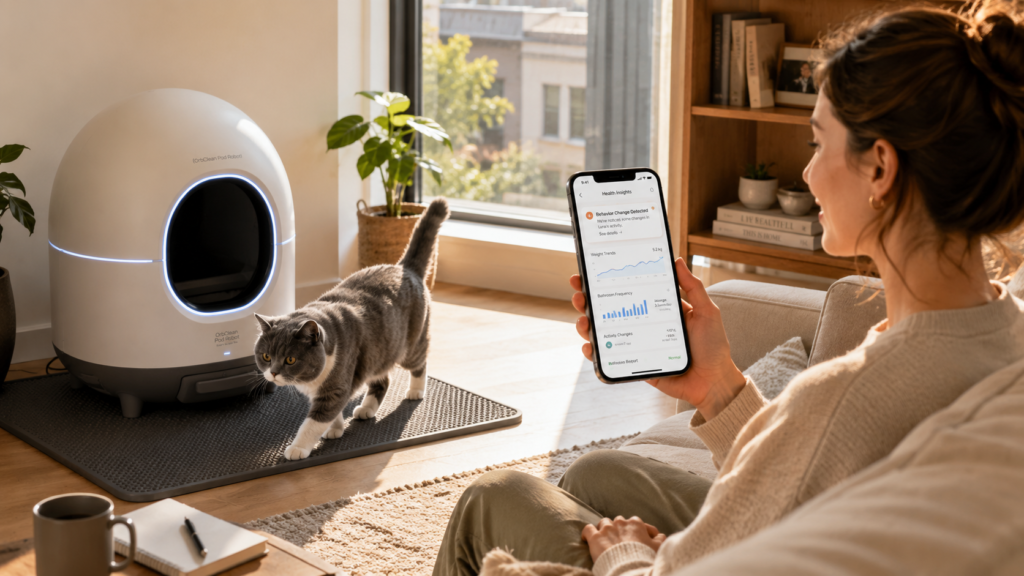
On this page
Introduction
Yes, a litter box can sometimes predict a vet visit before it happens, not by diagnosing disease on its own, but by catching small, boring, easy-to-miss changes in elimination habits, body weight, and daily routine before those changes become a crisis.
That matters more than a lot of people in the pet trade used to think. For years, smart litter boxes were pitched as convenience gear, a nice way to automate scooping and save somebody from one more daily chore. Fine. Useful. A little lazy, maybe, but useful. Now the category is moving somewhere much more serious. The litter box is turning into a passive health data collection point, one of the few places where a cat reliably leaves measurable evidence every single day.
For pet industry professionals, distributors, retailers, and pet technology brands, that shift is the real story. This is no longer just a hardware conversation. It is creeping into companion animal health, veterinary data analytics, subscription software, and preventive care behavior. Quietly, then all at once.
Why pet health monitoring is becoming a major trend
The pressure is coming from both sides. Consumers want earlier warning signs, and the animal health industry wants better home-based monitoring technologies that create usable clinical context before the patient even reaches the exam room.
A few forces are pushing this category forward:
- Vet costs keep climbing, and pet owners are desperate to avoid expensive emergencies they “should have seen sooner”
- Cats are famously subtle when they feel awful, which makes reactive care a losing game
- Digital animal health innovations have trained buyers to expect alerts, dashboards, and trend lines, not just a plastic product with one job
- Multi-pet homes complicate everything, because two cats rarely mean a neat doubling of costs or care needs
That last point gets overlooked. Two cats usually mean more litter use, more food variation, more risk that one animal quietly consumes resources and attention differently than the other. I’ve seen plenty of households rationalize the budget until one cat needs renal support food and the other starts straining in the box at 2 a.m. Suddenly the “cat fund” becomes very real. From a retail perspective, preventive pet healthcare tools start looking less like luxury tech and more like budget control.
The growing role of smart pet technology
The broader pet tech market has already normalized smart collars, surveillance cameras, connected feeders, GPS trackers, and wearable devices. Most of those tools are useful, especially for dogs. Cats are trickier. Indoor cats can look “normal” right up until they very much are not.
That is why litter-based monitoring has such a strong signal.
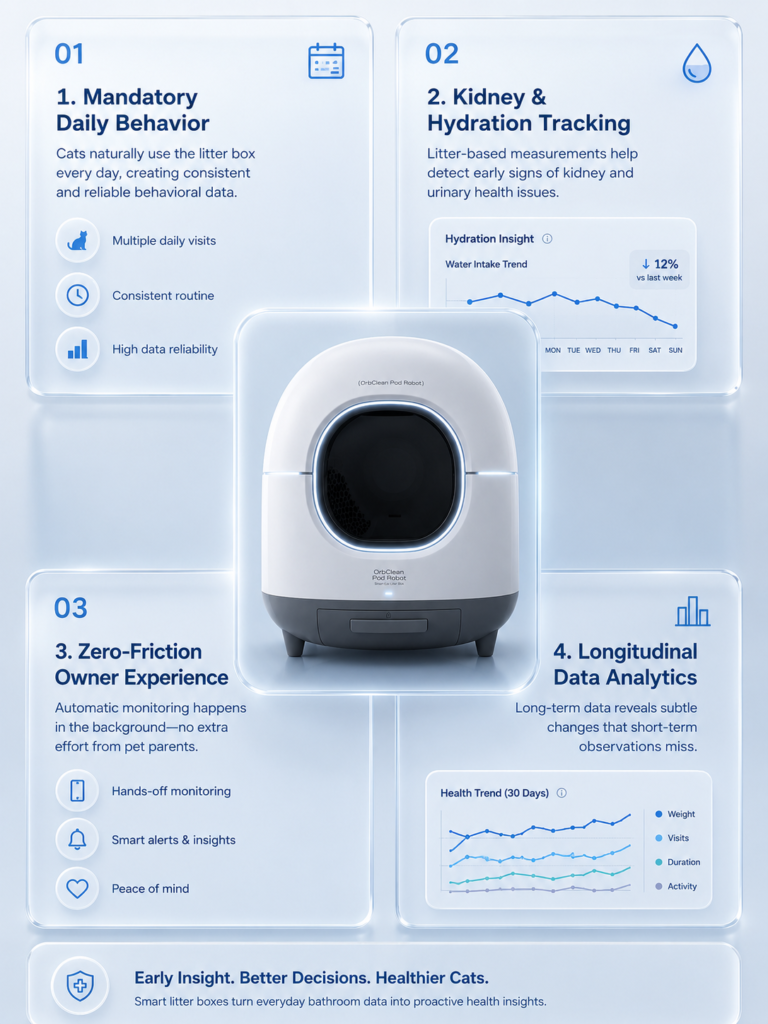
- A litter box captures mandatory daily behavior, not optional activity.
- It records output tied directly to kidney function, urinary status, hydration, digestion, and stress.
- It can measure individual pets repeatedly without asking the owner to do much.
- It creates longitudinal data, which is where predictive analytics starts to matter.
A smart collar can tell you a cat moved less. A weight monitoring litter box may tell you the cat moved less, urinated more, stayed longer, and lost 8 ounces over three weeks. That is a much sharper story.
Why Traditional Cat Health Monitoring Falls Short
Cats hide illness. Everybody in veterinary medicine knows this. Owners know it too, usually right after they realize the warning signs were there all along.
Manual observation is weak by default. People work late. Business trips happen. Family responsibilities take priority. In multi-cat households, one litter box may be upstairs while another sits in the laundry room, making it nearly impossible to know which cat used which box.
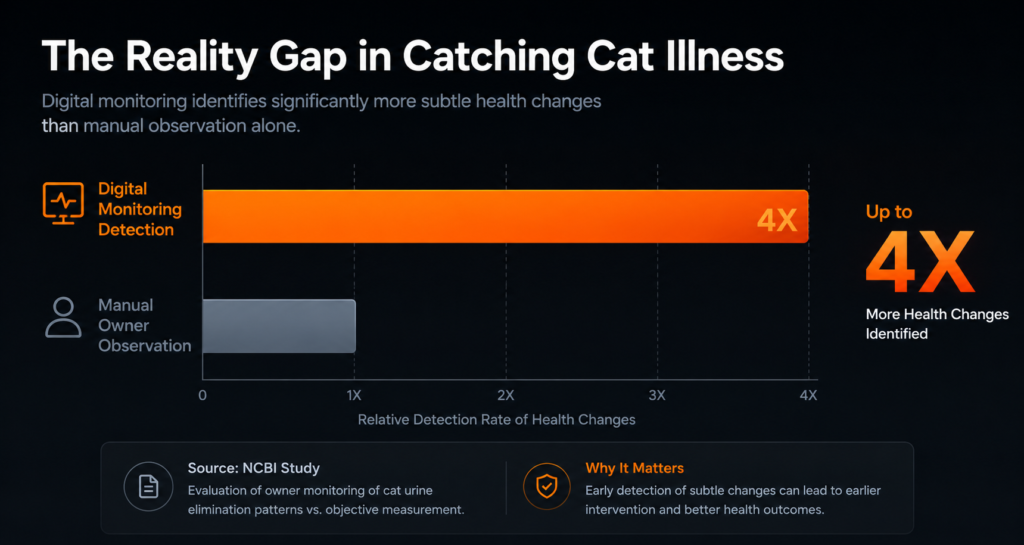
A classic study on feline urine elimination behaviors found that digital monitoring detected nearly four times as many urination events as owner observation. That gap is striking. It exposes how fragile the belief that “she seems to be peeing normally” really is when owners rely solely on memory and casual observation.
Symptoms also show up late, or at least feel late. Increased frequency, altered stool volume, prolonged posture, reduced covering behavior, house soiling, weight drift, these can all build slowly enough that human caregivers normalize them. A cat is sleeping more? It’s winter. A senior cat missed the box? Maybe she’s grumpy. Then a urinary blockage, CKD workup, diabetes screening, or pain consult lands on the calendar.
The environment complicates interpretation too. According to a 2025 study on litter box size and litter preference, larger boxes, around 20 inches or more, can reduce inappropriate urination. So behavior data is useful, but only if the setup is decent. A cramped, dirty, badly placed box can mimic disease or hide it. Senior cats are a perfect example. If mobility is declining, a low-entry box in an easy location may change the whole picture. Smart tools are powerful, but garbage environment still gives garbage data.
The Hidden Health Data Inside Every Litter Box
This is where the category gets interesting, because the litter box is less a container and more a daily sampling station.
| Signal | What the system tracks | Why it matters |
|---|---|---|
| Weight trends | Body weight before and after visits, gradual loss or gain | Flags obesity, muscle loss, dehydration risk, chronic disease progression |
| Bathroom frequency | Number of visits per day, time of day, repeat attempts | Supports early detection of urinary issues, diabetes, stress, CKD |
| Waste patterns | Urine volume proxies, stool frequency, duration, clump changes | Helps surface digestive changes, constipation, diarrhea, altered hydration |
| Daily behavior changes | Time in box, digging, covering, hesitation, aborted visits | Often correlates with pain, discomfort, anxiety, or obstruction risk |
A lot of this sounds obvious once you say it out loud. Of course the litter box contains health data. The odd part is how long the industry treated that information as invisible.
And cats are extremely pattern-driven animals. Small shifts matter. A healthy baseline is worth more than a one-off alert because it lets analytics platforms separate personality from pathology. One cat always takes forever in the box. Another never covers. That is normal for them. What matters is deviation.
How AI-Powered Smart Litter Boxes Work
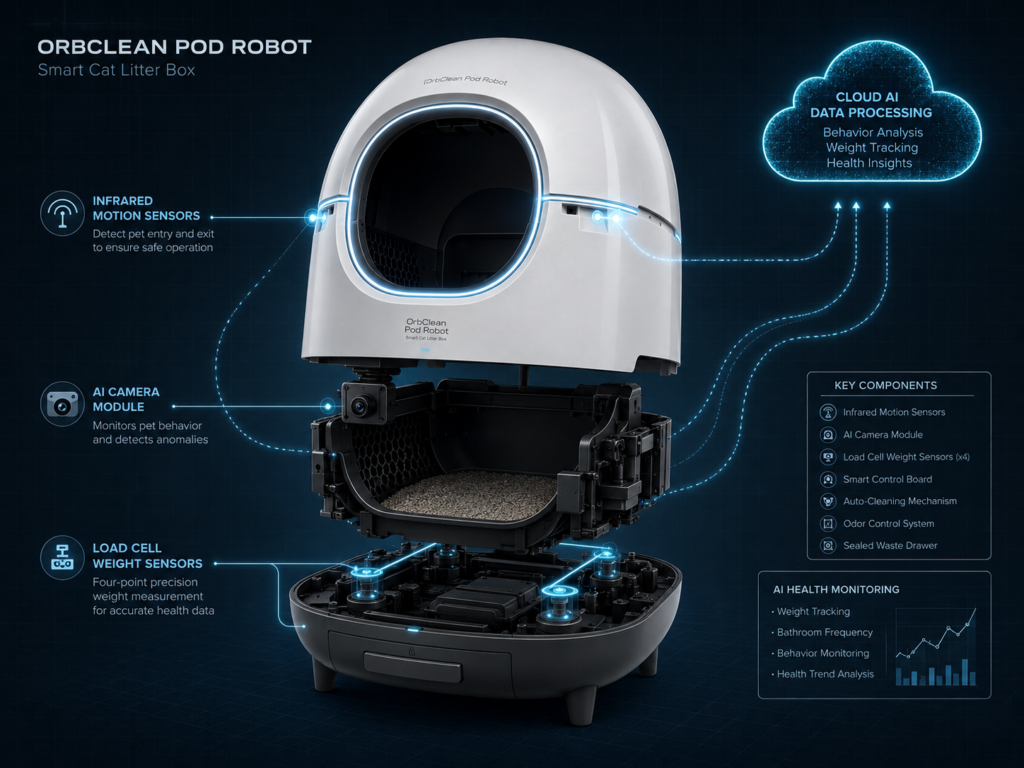
Under the hood, the better systems are not doing magic. They are combining sensors, time-series tracking, and machine learning algorithms to build a behavioral baseline and then watch for drift.
Most platforms rely on some mix of:
- Load cells or weight sensors under the box
- Motion sensing, infrared, or camera-based event detection
- Behavioral analytics that classify visit duration, frequency, and sequence
- Cloud-based dashboards that store data, push notifications, and create trend reports
The hardware is only half of it. The real value sits in interpretation. Smart sensors can capture raw events all day; predictive technologies decide whether those events mean anything. That means filtering noise, assigning visits to the correct cat in multi-pet homes, and avoiding false alarms when somebody simply switched litter or moved apartments.
Multi-cat attribution is still a pain point, frankly. Similar-sized cats can confuse systems unless the product uses stronger identity markers, richer behavioral signatures, or extra equipment. Retailers and distributors should pay attention here, because return rates and customer trust often hinge on whether the technology works in the messiest real-world homes, not the clean product demo.
Can Smart Litter Boxes Detect Health Issues Early?

In some cases, yes, and the evidence is getting harder to wave away.
For chronic kidney disease, the signal looks promising. A 2026 study published in Animals found smart litter box monitoring identified early CKD patterns with high precision, around 90 percent in the study population, by tracking shifts such as more frequent urination, longer elimination events, and altered covering behavior. Another piece of research on defecation frequency in cats showed cats with CKD had fewer bowel movements than healthy cats. Kidney disease is rarely dramatic at first. That is the whole problem. It erodes quietly.
Urinary issues may be even more commercially important because they are common, urgent, and often expensive. Repeated box visits, straining, tiny outputs, or sudden avoidance can point toward cystitis, crystals, inflammation, or obstruction risk. The Cornell Feline Health Center’s guidance on house soiling makes the veterinary point clearly enough: elimination changes often accompany medical disease, not “bad behavior.”
Obesity and weight drift are slower stories, but no less useful. Passive weight monitoring is one of the cleaner features in this category because owners almost never weigh cats consistently at home. A box that records body weight daily can surface creeping gain long before the annual exam. Or loss, which can be more worrying.
Digestive abnormalities are also sitting there in plain sight. Stool frequency, duration, skipped days, repeated posturing, messy output. That is real animal health data. A veterinary consensus on behavioral signs of pain in cats includes litter box related behaviors because pain often leaks into elimination long before people notice a limp or a dramatic change in appetite.
Then there is diabetes. Increased urination, larger clumps, urgency, missed trips. The IAABC discussion of behavior changes related to feline diabetes connects those shifts to day-to-day management in a way many consumer products still under-explain.
What Veterinarians Think About Pet Health Technology
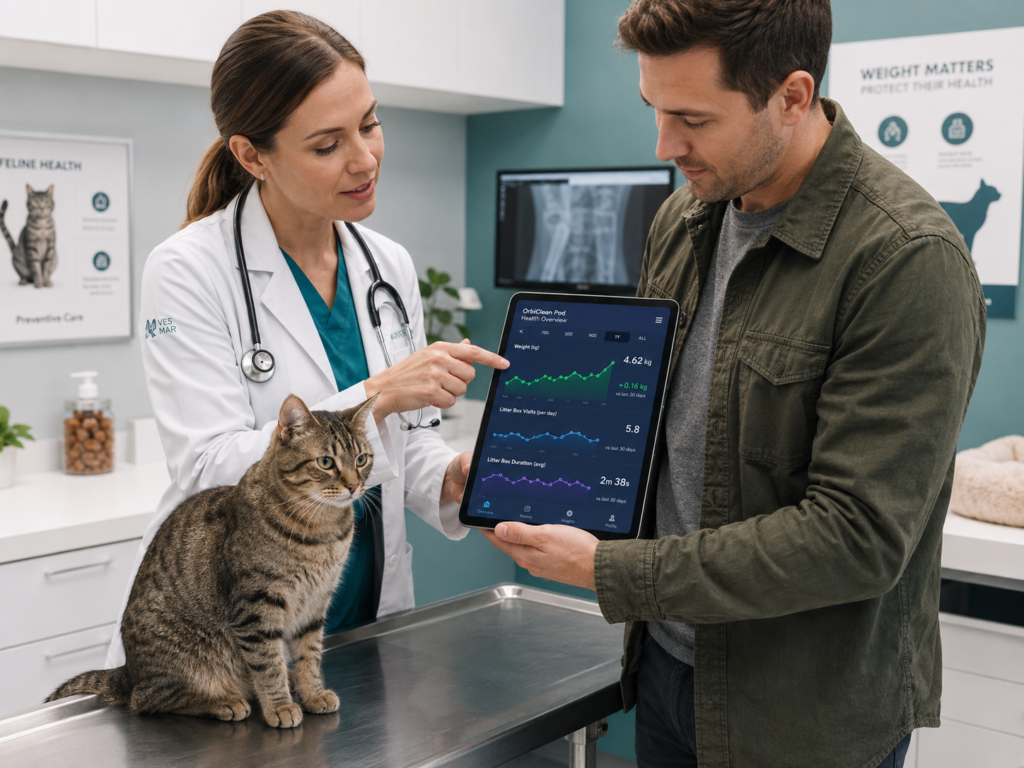
Most veterinarians are reasonably enthusiastic when the technology delivers clean trends instead of noisy gadget theater.
The benefit is straightforward. Better baseline data can speed triage, sharpen the history, and help a veterinarian decide whether this looks like “monitor at home,” “book this week,” or “come in now.” A smart litter box cannot diagnose CKD, diabetes, constipation, or lower urinary tract disease. It can, however, give a veterinary practice something better than a vague owner recollection.
That said, clinicians have limits for this stuff, and fair enough. Alerts can create anxiety. False positives can waste appointments. False reassurance can be worse. A product that markets itself like a diagnostic lab in a plastic shell is asking for trouble.
The more grounded clinical view tends to match what Fear Free says about pain-related behavior changes and what DVM360 notes about feline pain signals: subtle changes matter, and they deserve veterinary interpretation. Home monitoring supports clinical decisions. It does not replace them.
Even lower-tech products fit this logic. Color-shifting health indicator litters can be useful because they prompt action. They are catalysts, not conclusions.
Why AI Health Monitoring Is Creating a New Product Category
This is the part the market should not undersell. Smart litter boxes are moving from appliance logic to platform logic.
| Old category lens | New category lens |
|---|---|
| Automated cleaning product | Home-based health monitoring platform |
| One-time hardware sale | Recurring data service and alerts |
| Convenience purchase | Preventive pet care and risk management tool |
| Household gadget aisle | Cross-category animal health product opportunity |
Once health insights become the value proposition, the business model changes. You start seeing room for premium analytics, tele-vet integrations, wellness subscriptions, insurance partnerships, data integration with veterinary records, and retailer education programs that sound more like medical technology than litter accessories.
Consumer demand is helping. Pet parents already accept connected devices if the payoff feels concrete. “Less scooping” is nice. “We caught a kidney issue earlier” is memorable. So is “we avoided an emergency.” In a market full of lookalike smart devices, health monitoring creates differentiation that actually means something.
For distributors and animal health companies, there is also whitespace in channel strategy. Mass retail may still lead with convenience. Specialty pet, veterinary clinics, and animal healthcare adjacent channels can frame the same device through wellness, early detection, and proactive pet care. Same product, different job.
The Future of Smart Litter Boxes
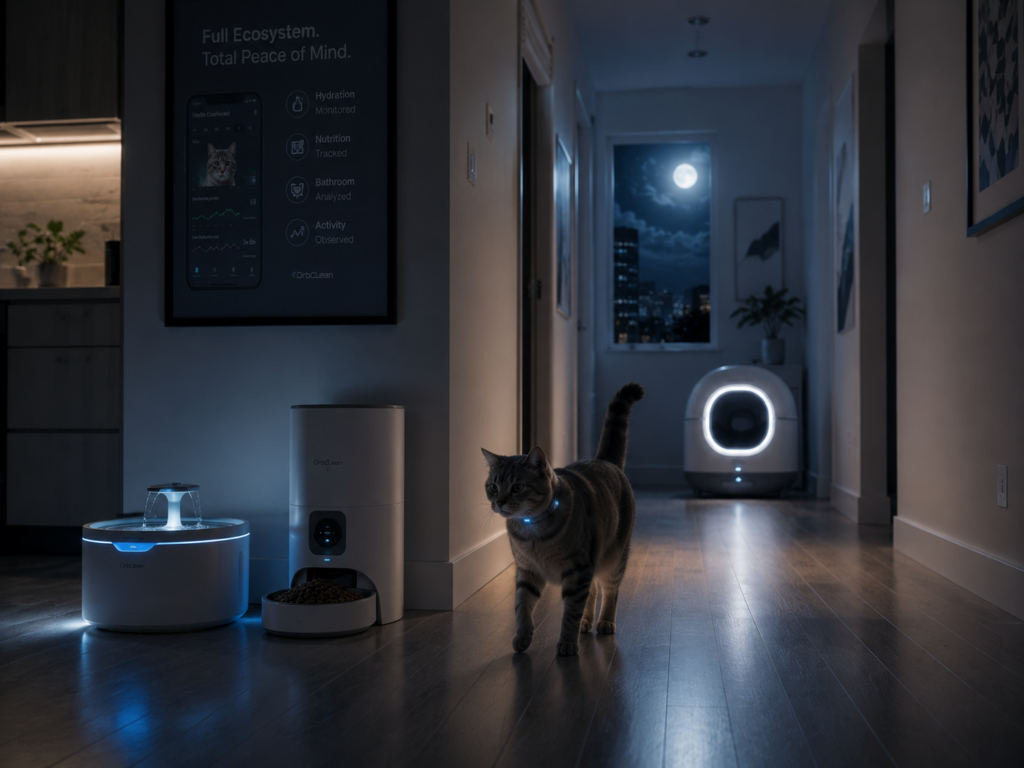
The next phase will be less about flashy equipment and more about better predictive analytics.
Expect tighter integration across connected ecosystems: water intake from fountains, meal patterns from feeders, inactivity from smart collars, litter box outputs from digital monitoring technologies, maybe even environmental data from the home. Put together, that becomes a stronger model for companion animal health than any single device can offer alone.
I suspect the winners will be the brands that stay disciplined. More validation. Better user education. Cleaner alerts. Less hype. The veterinary field has no shortage of gadgets already. What it needs are new tools that fit real workflows, respect clinical limits, and produce data a veterinarian can actually use.
There is also a bigger strategic angle. As digital animal health innovations mature, the home becomes part of the diagnostic perimeter. Not a hospital, obviously. Not a lab bench. Still, a meaningful extension of veterinary science, where early behavioral data can surface health changes before disease becomes unmistakable.
Conclusion
So yes, a litter box can predict the need for a vet visit in the practical sense that matters most: it can flag abnormal patterns early enough for somebody to act.
That is a very different promise from automatic cleaning, and a far more valuable one. For the pet industry, smart litter boxes are becoming health monitoring devices, a new class of connected animal care tools built around everyday behavior, passive data capture, and earlier intervention. The scoop is almost the least interesting part now.
Free download
Smart Pet Feeder — Supplier Evaluation Checklist
A 1-page checklist to vet smart feeder suppliers: FCC/CE, app stability, MOQ, tooling ownership and lead time.
No spam. Unsubscribe anytime.
Ready to source smart pet products?
Tell us your target market and volume — we'll match the right factory, handle compliance, and quote within 24 hours.