How to Choose a Smart Pet Feeder Supplier: 7 Questions Every Distributor Should Ask
 ·
·
Updated Jul 10, 2026
·
20 min read
·
102 reads
·
·
Updated Jul 10, 2026
·
20 min read
·
102 reads
On this page
Introduction
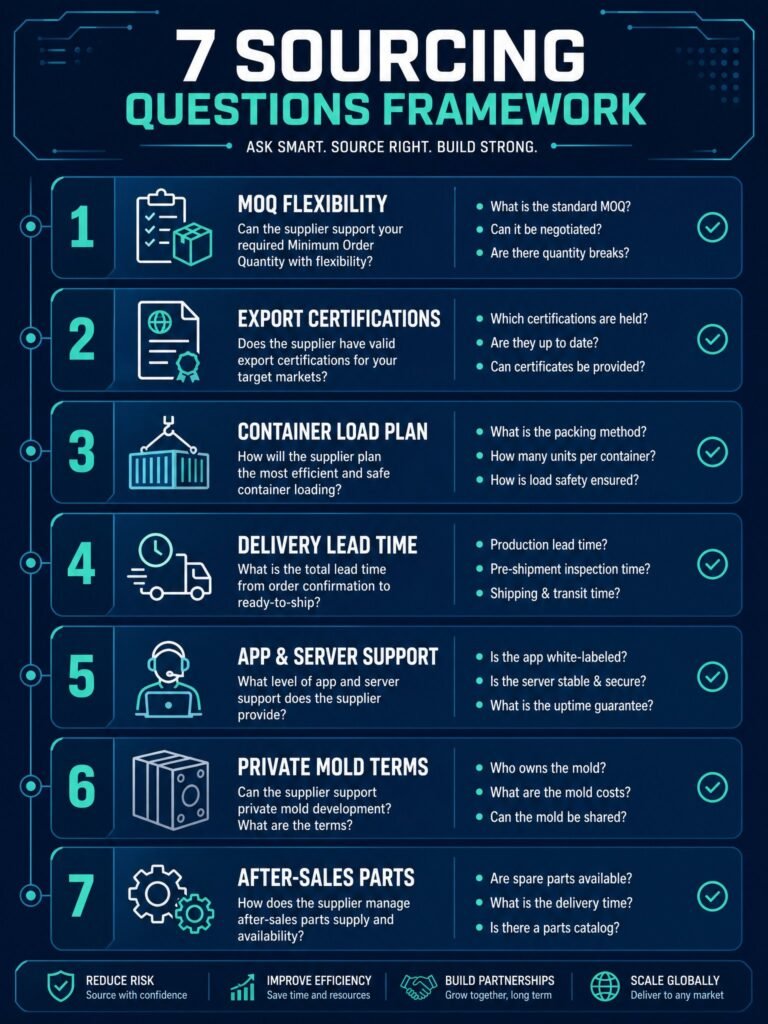
If we’re choosing a smart pet feeder supplier, the fastest way to separate a real OEM partner from a glorified trader is brutally simple: ask seven questions up front about MOQ flexibility, export compliance, container loading, delivery lead time, app options, private mold support, and after-sales parts. Most sourcing mistakes show up inside those seven answers.
A lot of buyers learn this the annoying way. The sample looks clean. The app demo behaves. The quote lands where procurement wants it. Then the cracks appear. MOQ turns rigid after the first call. CE turns out to mean a logo on the carton, not a valid Declaration of Conformity. REACH is “no problem” until we ask for the SVHC statement. The hopper jams on oily kibble. The camera model needs a cloud server nobody on our side can audit. Suddenly that “smart” feeder is just a slow-moving returns machine.
And that stings more now because this category is moving fast. Smart pet feeders have been one of the sharper-growth corners of pet care, and the broader market forecasts still point upward, with one global smart feeder projection calling for sustained high single-digit growth through the next few years. Growth attracts good factories. It also attracts factories that learned a few buzzwords and printed a nice brochure.
Why buyers switch
Distributors switch suppliers for the same reason pet owners switch products. Friction. Too much of it.
The old automatic pet feeder story was basic timing and gravity-fed convenience. The new story is portion control, app scheduling, anti-jam mechanics, desiccant pack protection, backup power, feeding logs, and in some cases camera monitoring. Retail buyers have already been trained by the market to expect those smart technology features. In hands-on testing from CNN Underscored, reviewers keep coming back to the same themes: remote convenience is great, portioning matters, and reliability is where brands win or lose.
That buyer expectation changes sourcing behavior. A plain timer unit may still move in some channels, especially price-sensitive pet stores, but more distributors want a range. Entry model. Mid-tier Wi-Fi. Camera version. Maybe a dual-bowl or a scale-assisted design. Maybe a model for dogs, another for cats, another for multiple pets. Once the line gets broader, the supplier needs to do more than mold plastic and ship boxes. They need product planning discipline.
What goes wrong
Usually, not in the obvious places.
The finish can look fine and still hide weak internals. The finish can look fine and still hide weak internals. In some feeders, poor auger geometry causes irregular kibble to bridge and stall the feed path. Security can be another weak point, as lids that seem adequate during testing may not withstand real-world use by persistent pets. Software reliability deserves equal scrutiny, since app demos that perform flawlessly on factory Wi-Fi often reveal stability issues when deployed across different languages, markets, or server regions.
Consumer feedback tells the same story. One brand gets praised for usability, another for access control in multi-pet homes, another for premium construction, another for advanced features. Useful signals, all of them. Still, the pattern matters more than the brand names: app stability and anti-jam design vary wildly. A fancy shell does not rescue a bad feed mechanism. A camera does not compensate for a brittle cloud setup. And if the bowl, chute, or hopper is annoying to clean, returns creep up in a hurry.
Then there’s the export side, which is where many otherwise capable manufacturers get clumsy. They’ll say they have CE, FCC, and REACH. Fine. Ask them to send the documents. Silence gets loud very quickly.
How to compare
We don’t need a mystical sourcing framework for this. We need a disciplined comparison sheet and a little skepticism.
Use these seven questions first:
- Can they support a trial MOQ without punishing unit economics?
- Can they provide valid CE, FCC, and REACH documentation for the exact model we’re buying?
- Can they show packed dimensions, carton counts, and real 20-foot or 40-foot load plans?
- Can they hit our delivery window in both normal months and peak season?
- Can they support white-label or custom app work that fits our market?
- Can they handle private mold projects with clear ownership and NRE terms?
- Can they support spare parts, replacements, and warranty claims after shipment?
That’s the short list. Not glamorous. Effective.
Can they match your MOQ plan?
MOQ is where a supplier reveals whether they actually understand channel building or just want easy container business.
A distributor entering smart feeders today rarely wants to bet everything on one SKU, one color, one market message. We may want a pilot run for e-commerce, a different pack for retail, and maybe a trimmed assortment for regional distributors. If the factory only works when we commit to a huge single-SKU order, that may be their comfort zone, but it doesn’t have to become ours.
Trial orders
The good suppliers know trial orders are not charity. They’re customer acquisition.
When we ask for a first run, we’re not only testing a product. We’re testing factory discipline, packaging accuracy, firmware maturity, carton strength, and service response. A smart pet feeder supplier that can’t make a sane pilot program work is telling us something important. Probably more than they mean to.
What we want to hear is not “our MOQ is low.” That phrase is too cheap to trust. We want specifics. Can they support pilot quantities with standard colors? Can they mix a few SKUs in one shipment? Will they share the delta between sample BOM cost and production BOM cost? If they quote a tiny trial MOQ but bury us in tooling fees, packaging surcharges, and manual handling charges, the flexibility is cosmetic.
Here’s a rough way to read supplier answers:
| Supplier response | What it usually means | Risk level |
|---|---|---|
| Small trial order, standard pack, limited color choice | Real pilot support | Lower |
| Medium MOQ, but mixed models allowed | Decent for staged launch | Moderate |
| Large MOQ, single SKU only | Factory prefers simple volume | Higher |
| “Any quantity is okay” with vague pricing | Likely trader behavior or unstable costing | Highest |
Volume breaks
Unit price by itself is a terrible judge.
Price breaks should be tied to real production logic, not vague negotiation tactics. Cost reductions may become possible when PCB procurement improves at higher volumes, carton utilization becomes more efficient, or assembly line balancing stabilizes after the initial production run. Those are reasonable and measurable drivers. What buyers should avoid are discounts with no clear structure, since poorly justified pricing concessions often lead to inconsistent lead times, unexpected substitutions, and unreliable follow-through later in the project.
Ask where the price breaks occur and why. Ask whether the lower price assumes one color box, one adapter standard, one language manual, one app region, one barcode format. Those details are not decorative. They are the order.
Mixed SKUs
Mixed SKUs are where many factories quietly lose their nerve.
A distributor may need one automatic feeder for value retail, one Wi-Fi smart feeder for e-commerce, and one camera model for premium channels. The supplier should be able to explain how mixed production affects carton count, line setup time, lead time, and procurement of electronic components. If they answer like every model is isolated on its own island, their production planning may be thin.
And this matters because pet product distributors do not sell in a vacuum. Success often depends on building a balanced product range, testing attachment sales, and creating category bundles that may include pet fountains, bowls, mats, or cat litter accessories. When a factory lacks flexibility, those merchandising and channel strategies become much more difficult to execute.
Do they hold export certifications?

This question gets butchered all the time, so let’s clean it up.
For Europe, CE is not a trophy the factory “holds” in the way people casually say it. It’s a compliance framework. For the United States, FCC applies if the feeder includes radio functionality or other electronics covered by FCC rules. REACH is not a product certificate either. It’s a chemical compliance obligation tied to substances and materials in the product. So when a supplier says “we have all certifications,” we should immediately ask, “For which model, under which standard, and can we see the document pack?”
CE and FCC
For a Wi-Fi or app-connected pet feeder, the CE conversation usually touches radio equipment, EMC, electrical safety, and sometimes RoHS depending on market scope and product design. The factory should provide a Declaration of Conformity tied to the exact SKU, not some cousin product from last year with a different PCB.
FCC deserves the same attention. If the unit uses Wi-Fi or Bluetooth, ask what approval path applies and whether the module carries an existing authorization or the finished product needed additional testing. If the answer gets fuzzy, it will not become less fuzzy after customs or marketplace compliance review.
A plain programmable feeder without wireless functions can have a very different documentation burden than a camera-enabled IoT unit. That difference is why model-level paperwork matters.
REACH status
REACH questions are where weak suppliers often try to improvise.
What we want is a current SVHC statement, ideally with supporting material declarations from upstream suppliers. If the product includes coatings, flexible seals, cables, adhesives, or colorants, those are obvious checkpoints. The hopper, bowl, and food-contact parts deserve extra scrutiny, especially if we’re selling into markets with stricter retailer compliance policies.
And no, “food grade” on its own does not settle this. It barely starts the conversation.
If we sell into California, we may also want a separate look at Proposition 65 exposure issues. That is not the same thing as CE, FCC, or REACH, and plenty of teams blur them together until someone in compliance has a very bad afternoon.
Test reports
A serious supplier can send a clean document trail. Not instantly, maybe, but cleanly.
A useful file pack usually includes:
- the Declaration of Conformity and the standards list tied to the exact feeder model
- FCC-related reports or module authorization details where applicable
- a REACH SVHC statement with date and company stamp
- basic reliability or internal validation records for the feed mechanism, power backup, and app function
What we’re testing here is not just compliance. We’re testing document hygiene. A manufacturer that cannot control its paperwork rarely controls change management much better.
How many units fit each container?
Container math sounds boring right up until we realize it can erase margin faster than a bad ad campaign.
Two suppliers can quote similar unit prices and land in very different places once carton efficiency, dead space, and pallet policy enter the room. The one with the cheaper unit can easily become the more expensive landed cost.
Carton sizes
Ask for packed unit dimensions, master carton dimensions in inches, gross weight, net weight, units per carton, and whether the tray, bowl, adapter, and desiccant pack ship assembled or nested.
Small differences matter. A hopper shape that looks stylish on a product page can waste a ridiculous amount of cubic space. Oversized foam can protect the item and still punish container efficiency. A camera blister window on the gift box may help at retail and hurt our load plan. Everything trades against something.
Here’s the data we should request before approving any quote:
| Data point | Why it matters |
|---|---|
| Gift box size | Retail presentation and master carton efficiency |
| Master carton size | Container utilization and warehouse slotting |
| Units per carton | Picking speed and landed cost math |
| Gross weight | Freight rating, handling, safety |
| 20-foot and 40-foot load estimate | Real shipment planning |
| Palletized vs floor-loaded plan | Import country and channel requirement |
Load plans
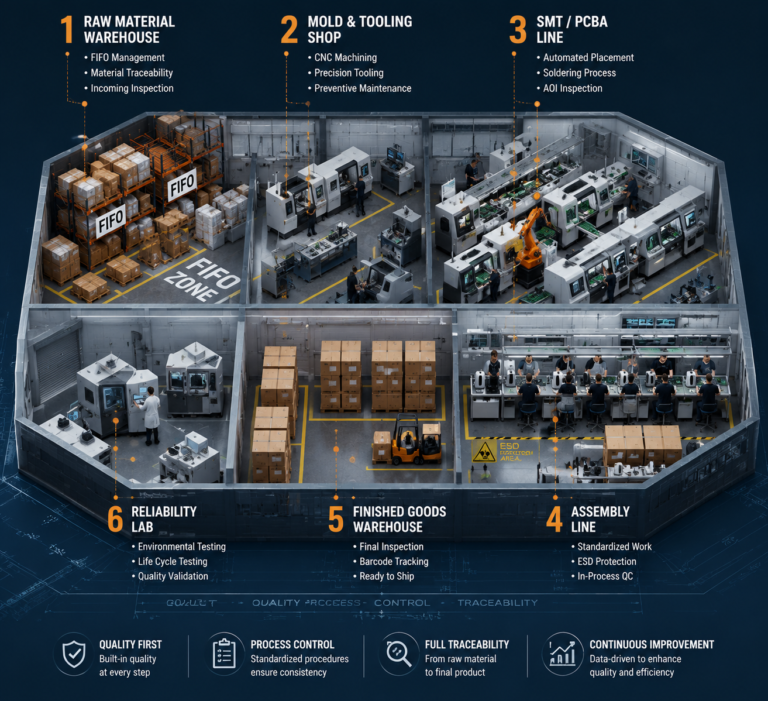
A real OEM pet feeder manufacturer should be able to show a load plan, not just guess at one.
We want to know whether they floor-load or palletize by default, how they protect corners, how they stack cartons, and what happens when we mix SKUs. If they can share container photos from past shipments, even better. Not because photos are proof of perfection, but because they reveal whether the factory has actually done this before at scale.
When a supplier says “about 5,000 units in a 40-foot,” press them. “About” is not a planning number. The carton drawing is the planning number.
Cost impact
This is where procurement teams either look sharp or get fleeced politely.
A feeder with a slightly higher ex-works price but tighter carton geometry can outperform a cheaper unit on landed cost. If the product also reduces damage claims and warehouse headaches, the gap widens. Smart sourcing is not only about the factory gate price. It’s about the full path from line output to customer unboxing.
And this category has extra wrinkles. Camera models, dual-bowl units, and scale-integrated products often carry more dimensional drama. If we ignore that, the margin report will not ignore us back.
Can they meet your delivery window?

Lead time on a pet feeder quote has two versions. The one on the sales sheet, and the one reality enforces.
We care about the second one.
Tooling lead
If the project uses an existing model with logo and pack changes only, lead time can be fairly ordinary. If we’re changing the housing, the lid lock, the button panel, the bowl, or the feed structure, tooling becomes the calendar.
Ask what is actually being changed. Cosmetic ID changes are not the same as structural changes. A new front shell might be straightforward. A new hopper geometry or auger part can trigger debugging on feed consistency, jam rate, and motor load. That is not a place to rush.
If the supplier claims they can open tooling, validate, sample, and mass produce suspiciously fast, we should assume one of two things: they are overselling, or they haven’t thought through the risk.
Mass production
Mass production timing should be broken into pieces. Material purchasing. PCB and module lead. Injection schedule. Assembly line window. Aging or functional test. Packaging. Final inspection. Booking.
That level of detail matters because smart feeders blend plastic hardware with electronics and firmware. A simple bowl shortage may be easy to solve. A Wi-Fi module delay or firmware bug is a different species of problem. The best factories do not pretend those issues are identical.
This is also where we judge honesty. If a manufacturer tells us the standard lead time is, say, five to seven weeks and premium models take longer, that’s often more reassuring than someone promising miracles.
Peak season
Peak season pressure hits earlier than many new buyers expect.
Holiday retail cycles, promotional campaigns, and Q4 replenishment can strain far more than final assembly operations. Critical components such as motors, adapters, retail cartons, and even desiccant packs may face supply pressure during peak periods. For that reason, buyers should evaluate how a supplier manages seasonal demand, including capacity reservation, production line flexibility, customer prioritization policies, and inventory planning for key components.
A pet feeder wholesaler who has been burned once by peak-season optimism usually stops asking “what is your lead time?” and starts asking “what was your last peak-season on-time rate?”
Will the app meet your market needs?

This one separates current product from current headache.
Because yes, a smart pet feeder app can be a real selling point. It can also become the thing customers complain about every day while the hardware sits there getting blamed for software sins.
White-label options
Not every distributor needs a fully custom app. Some need a branded login screen, localized language pack, and packaging that matches the retailer. Others want deeper control, push notifications, usage analytics, and account ownership under their brand. We need to know which camp we’re in before we let a supplier pitch us everything under the sun.
White-label can mean a lot or a little. Sometimes it means logo replacement and color skin. Sometimes it means a private cloud instance, custom features, and ownership of user data handling processes. Those are not remotely the same deal.
Ask what is configurable now, what requires engineering work, and what breaks future firmware updates if customized.
Server support
Server region matters. Data handling matters. Privacy controls matter. If the unit includes a camera, they matter even more.
A lot of end users are happy with remote feed scheduling and a quick check-in. Still, buyers have grown more skeptical about IoT products that feel sloppy about security. Fair enough. They should be. If the feeder records video or stores account data in the cloud, we need to know where the servers sit, how firmware updates are pushed, how account access is managed, and what happens if the app vendor sunsets a service.
Even on the consumer side, reviewers notice the same fault lines. Some models are praised for easy app control, others for more ambitious smart technology features, but the mixed feedback nearly always circles back to connection drop-offs, re-binding hassles, or software that feels less stable than the hardware. That’s not a niche complaint. It is the complaint.
Stability checks
We should never accept “the app works” as a meaningful statement.
Ask for evidence of stability checks. Not source code, obviously. Basic validation is enough to start. Reconnect behavior after power loss. Feeding schedule retention after router interruption. Manual feed trigger response. Offline state behavior. Firmware rollback plan. If the feeder has backup battery power, does the schedule hold during outages? If the network drops, can the unit still execute local meals on time?
And while we’re at it, ask a rude but useful question: how well does the lid resist a determined cat? Because some animals are criminally talented. If the lock, latch, or hopper seal is weak, the app becomes almost irrelevant. A clever cat can turn a premium device into a self-serve buffet by Tuesday.
Do they support private mold projects?
Private mold is where margins and differentiation can get interesting, and where misunderstandings get expensive.
Some distributors truly need it. Others only think they do. We should be clear.
ID changes
Start with the smallest meaningful change. Logo badge. Colorway. Button lens. Tray shape. Front shell. Handle. Lid texture. Packaging architecture. Many brands can get enough separation through ID work without opening a full structural project.
That route is faster, cheaper, and less likely to introduce feed path problems. A new look is nice. A new jam issue is not.
Tooling ownership
If we do move into private mold territory, ownership terms need to be written with insulting clarity.
If the project involves private tooling, ownership terms should leave little room for interpretation. Key areas include who finances the tooling, who retains legal ownership, where the tool is stored, and whether it can be reused for other customers. Buyers should also clarify transfer rights in the event of a manufacturing change, along with procedures for inspection, relocation, or buyout. Any custom software, firmware, or PCB development should be covered under the same framework, with intellectual-property ownership and usage rights clearly documented before production begins.
Bad contracts here create years of weird tension.
NRE terms
Non-recurring engineering fees are normal. Murky NRE is not.
We want an itemized view. Tooling. Prototype adjustment. Firmware changes. App customization. New packaging die-lines. Validation samples. If the project fails after EVT or pilot because the feed mechanism cannot hit the target performance, what part of the NRE is sunk and what part rolls into revisions?
That answer tells us whether the factory thinks like a development partner or a cashier.
What parts and after-sales terms apply?

This is where the grown-up conversation happens.
A smart feeder is not a static plastic item. It has moving parts, electronics, and customer behavior that can get inventive. Bowls get lost. Adapters fail. lids crack. Desiccant covers go missing. Power cords vary by market. If there’s a camera, someone will eventually ask how to replace that module. If there’s a scale, someone will ask why calibration drifted. That is the job.
So we should ask for the spare-parts policy before we place the order, not after the first return batch hits our warehouse. At minimum, we want to know whether the supplier can provide replacement bowls, lids, adapters, food rotors, stainless components if used, sealing rings, and key electronic parts for warranty handling. We also want to know whether they offer spare-parts kits as a percentage of order volume or sell replacements only case by case. Effectively managing these components is the foundation of a reliable after-sales support system.
A decent after-sales policy usually spells out a few things clearly:
- warranty period and the failure types it covers
- free spare-parts ratio for opening orders or repeat orders
- response window for defect analysis and replacement approval
- whether the factory supports video diagnosis, component swap, or full-unit replacement
The practical reason is simple. Pet owners rarely care whether the fault came from firmware, motor torque, or user setup. They want their pet feeding routines restored fast. If our supplier cannot help us do that, we become the repair center, the therapist, and the punching bag all at once. Furthermore, a dedicated after-sales support mechanism is essential for protecting your supply chain from reputational damage.
FAQ
Buyers often ask whether they should source one universal feeder for both dogs and cats. Usually, no. Portion size, kibble shape, bowl height, and channel expectations differ enough that a one-size product tends to become a compromise product.
Another common question is whether camera models are always better. Not really. They can raise perceived value and help remote monitoring, but they also raise privacy, server, and support complexity. In some markets, a stable app-controlled feeder without a camera is the smarter SKU.
We also get asked whether a wet food factory can easily pivot into smart dry food dispensers. Sometimes, but not automatically. Wet food handling, chilled meal formats, and dry kibble dispensing involve different mechanical and hygiene challenges. Shared pet care experience helps, yet the product engineering is not interchangeable just because both touch food.
And yes, retailers still ask whether basic programmable feeders have a place now that smart technology is everywhere. They do. Entry-level automatic feeders can still perform well in value channels, backup scenarios, and regions where app adoption or Wi-Fi setup is a barrier. The trick is building the range intelligently instead of assuming every market wants the same level of connectivity.
Conclusion
Most sourcing disasters in this category do not begin with a dramatic failure. They begin with unasked questions.
So use this checklist rigorously. MOQ affects margins, compliance documentation can determine whether shipments clear customs, and weak supply-chain planning can quickly erode profitability through delays, stockouts, and returns. That is why distributors should evaluate every critical area, from container utilization and lead times to app reliability, private mold ownership, and spare-parts support. The right supplier does more than manufacture products; it helps protect margins, reduce risk, and support long-term growth.
Then compare the answers side by side.
If a supplier claims serious OEM strength, they should be able to show a real product ladder too, not just one lucky model. That’s one reason a five-tier feeder lineup is a useful benchmark. Mesete, for example, frames its factory capability through a five-level range rather than a single hero SKU, which is exactly the sort of thing we should examine closely: entry models, smarter app-driven units, broader channel coverage, and the operational depth behind them. Not because we should blindly follow one factory’s script. Because a supplier that can support that breadth usually has clearer thinking about tooling, packing, compliance, and after-sales.
That’s the point. Don’t “trust the catalog.” Put every factory, Mesete included, against the same checklist and see who still looks strong when the easy sales talk runs out.
Free download
Smart Pet Feeder — Supplier Evaluation Checklist
A 1-page checklist to vet smart feeder suppliers: FCC/CE, app stability, MOQ, tooling ownership and lead time.
No spam. Unsubscribe anytime.
Ready to source smart pet products?
Tell us your target market and volume — we'll match the right factory, handle compliance, and quote within 24 hours.